
 LANGUAGE
 English
 Deutsch
 Español
 Français
 русский











DESCRIPTION ♦Helps nutrients get into the soil and down to the ...
See Details
Drum Spike Aerator Benefits: What It Fixes, Where It Fails, and How to Choose
A 48-inch drum spike aerator rolling across a school field at 7 km/h does three jobs in one pass: it cracks a sealed surface, drives shallow channels into the top 25 to 75 mm of soil, and lets the next rain soak in instead of running off to the low corner. It also leaves no cores behind, so the field can be mown the same afternoon.
What it will not do is rebuild structure in heavy clay. A drum spike aerator is a surface-management tool. Buy it for crusted topsoil, for large areas where plugging every square meter is impractical, and for routine seasonal upkeep. Buy a plug aerator when compaction sits deeper than the spikes reach and the soil has to be removed rather than pushed aside.
Quick verdict
Drum spike aeration wins on coverage, cost, and low surface disturbance. It loses on depth. Choose it when the problem is a sealed surface across a big area, not when the problem is a hardpan below the root zone.
What a Drum Spike Aerator Is Actually Doing
A drum spike aerator is a weighted cylinder studded with steel spikes, carried on an axle and pulled behind a tractor, ATV, or UTV, or mounted on a three-point hitch. Three things happen as it rolls.
- Spikes penetrate and lift. Each spike enters the surface at a shallow angle and rises as the drum turns, so the ground cracks around every hole instead of being punched straight down.
- The channels stay partly open. Holes run roughly 8 to 15 mm across at the top and taper with depth. Because soil is pushed aside rather than removed, some channels close again within days, especially in wet clay.
- The drum also firms the surface. That rolling action helps on loose, fluffy ground, and it is exactly why spike aeration is a poor match for saturated soil.
Penetration is a function of weight per spike and soil moisture. On dry, hard ground a light drum barely scratches. On wet, heavy clay, the hole walls smear and seal themselves behind the spike. The useful window sits in between: moist enough for the spikes to open the surface, dry enough for the channels to stay open.
Six Benefits That Hold Up in Real Conditions
Faster water intake, less runoff
A capped surface sheds most of a heavy shower. Spike channels break that seal so water reaches the root zone instead of the gutter. This is usually the first benefit owners notice.
Better oxygen at the root zone
Grass roots respire, and compacted, waterlogged soil holds very little oxygen. Reopening the top layer restores gas exchange, which supports deeper rooting and better stress tolerance in summer.
Fertilizer lands where it should
Granules sitting on a sealed surface wash away before they break down. Cracking the surface just before feeding puts nutrients into contact with moist soil where roots can reach them.
Thatch breaks down faster
A spike drum does not remove thatch. It keeps the thatch layer wet and biologically active, so the mat decomposes rather than building into a spongy layer that scalps under the mower.
Better seed-to-soil contact
A light pass before overseeding drops seed into open channels, which improves germination and reduces wash-off on slopes and thin patches.
High coverage at low cost
No engine, no hydraulics, nothing to empty. A 48- or 60-inch drum at 8 to 10 km/h works through acres in an afternoon, and the turf is mowable immediately afterwards.
Drum Spike vs Plug Aerator: An Honest Comparison
| What you compare | Drum spike aerator | Plug (core) aerator |
|---|---|---|
| Action on soil | Pushes soil aside, leaves channels | Removes soil cores |
| Working depth | 25 to 75 mm, surface layer | 50 to 100 mm, into the root zone |
| Soil removed | None | Cores left on the surface |
| Surface disturbance | Low; mow-ready the same day | High; cleanup or breakdown time |
| Best conditions | Crusted or mildly compacted topsoil, sandy loam, established turf | Heavy clay, deep compaction, thick thatch |
| Output per hour | High with 48 to 60 inch drums | Lower; slower passes, more stops |
| Ownership cost | Low; bearings and frame are the main wear points | Higher; hollow tines and service parts |
| Main risk | Sealing the channel walls when soil is too wet | Messy surface and longer recovery |
The common criticism of spike aeration is fair in one specific case: on saturated, heavy clay, a spike smears the channel wall and can leave the soil slightly denser right where water needs to pass. Repeated passes along the same line at speed make it worse. Two habits remove most of that risk: work when the soil is moist but crumbly rather than wet, and change direction on every visit.
Most turf programs end up running both tools. The spike drum handles routine surface management across large areas because it is fast and cheap to run. A plug aerator goes onto high-traffic zones once or twice a season. If you want the mechanical differences spelled out, this guide to how a 40-inch plug aerator differs from a spike aerator is a useful follow-up.
Where Drum Spike Aerators Earn Their Keep
- Sports fields and school grounds: low surface disturbance means the pitch returns to use quickly, so work can be scheduled between fixtures.
- Parks, cemeteries, and municipal turf: wide drums cover acreage with a small crew and no core collection.
- Pasture and paddocks: hoof traffic caps the surface; a spike pass ahead of rain opens it up again.
- Orchards and vineyards: narrow drums fit between rows and can be carried on the tractor's hitch.
- Large residential and estate lawns: a 36- to 48-inch tow-behind behind a lawn tractor or UTV suits most properties.
- Rental fleets and landscape contractors: no engine to service and very little to misuse.
For tractors already on site, a three-point mounted drum is the simplest option: it lifts on the hitch for turns and transport instead of dragging a drawbar around every corner. A 48 to 60 inch three-point drum spike aerator fits category 1 tractors and keeps the working width matched to the row or field.
 3PT 48/60 Inch Drum Spike AeratorTractor-mounted drum spike aerator for Category I hitches, with 48- or 60-inch working widths and retractable feet; suited to looser, sandy soils.View Product →
Sizing a Drum: The Decisions That Actually Matter
- Width. 36 inches suits gate widths, tight turns, and small yards. 48 inches is the general-purpose size for estates and small fields. 60 inches is the acreage choice, provided the tow vehicle has enough traction to pull it.
- Penetration, which is really about weight per spike. A heavier drum cuts deeper but pulls harder. Match the drum to the ground you work: sandy loam opens easily, clay needs more weight and better timing.
- Spike pattern and spacing. Straight rows roll smoothly and cost less. Staggered patterns reduce ridging on soft ground. Typical spacing runs 75 to 100 mm.
- Bearings and frame. Drum bearings are the first parts to fail on cheap units, so sealed or greaseable hubs and a solid through-axle matter far more than paint. Check the welds at the hitch and axle mounts.
- Hitch type. Tow-behind for ATV, UTV, and lawn tractors; category 1 three-point for compact tractors.
Tow-behind sizes cover most private and municipal work. A 48-inch drum is the middle of the range and the easiest to match to a mid-size tow vehicle, while a 60-inch unit is what you specify when acreage per hour is the deciding factor.
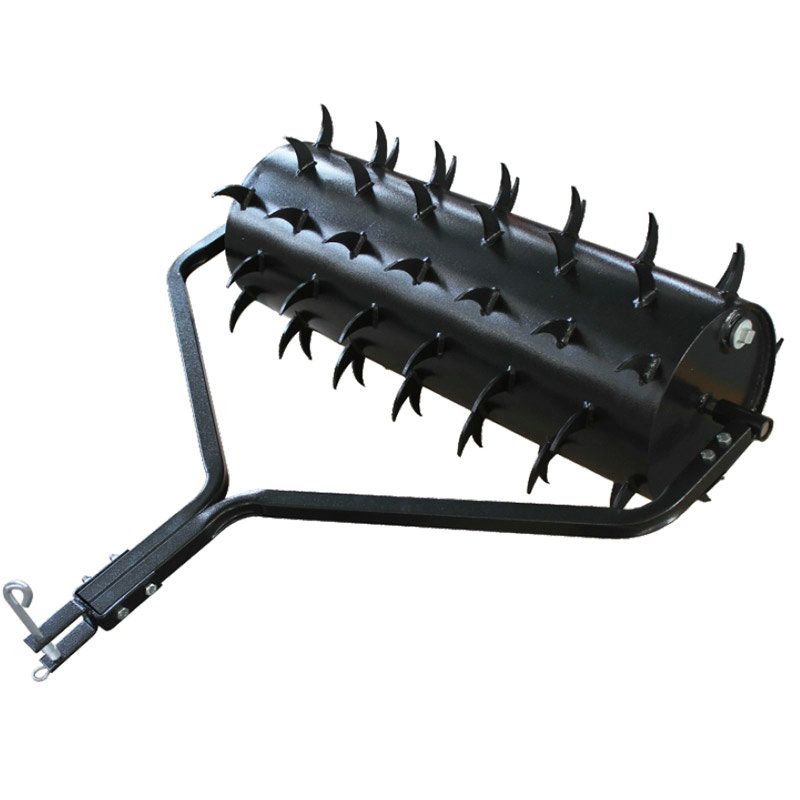 48-Inch Tow-Behind Drum Spike Aerator SP31130Tow-behind 48-inch spike aerator for lawn tractors and ATVs, with water-fill drum and 108 steel spikes; matches mid-size tow vehicles.View Product →
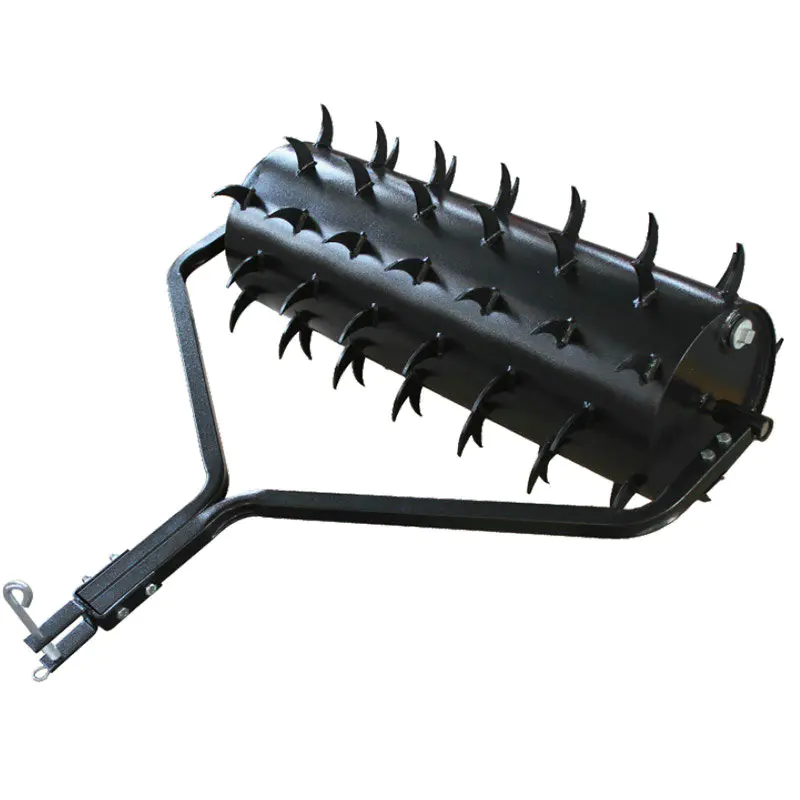 60-Inch Tow-Behind Drum Spike Aerator SP31131Tow-behind 60-inch spike aerator for lawn tractors and ATVs, with water-fill drum and 126 steel spikes for higher acreage per hour.View Product →
Operating Rules That Decide Whether You See Any Benefit
- Test the soil first. Push a screwdriver 100 mm into the turf. If it slides in with light pressure, conditions are right. If it bends, wait for rain. If water squeezes out around the blade, wait longer.
- Run two passes at right angles and overlap each pass by 10 to 15 percent of the drum width.
- Keep speed between 5 and 8 km/h. Faster and the spikes skip and tear; slower and the drum ridges soft ground.
- Aerate before you feed or seed, not after. Pass, then seed or fertilizer, then a light watering is the sequence that produces visible results.
- Time it to active growth. Early autumn and spring for cool-season grass, late spring for warm-season grass. Skip the hottest, driest weeks and the deep dormant period.
- Shift your lines each visit by half a drum width so you are not reopening the same channels every time.
Before You Buy or Stock: What to Verify
As an end user, confirm four things: hitch height and pin size match your tow vehicle, the drum weight suits your soil, the spike drum is replaceable, and bearings are a standard size you can source locally. A drum that cannot be serviced becomes scrap metal the first time a bearing seizes.
For distributors and importers, the questions shift to consistency. Are drums interchangeable between container loads, are the bearings a common specification, and can the factory document its quality system? Manufacturers working to ISO 9001:2015 with CE-marked product lines can supply the paperwork European and North American buyers request at the first audit, which shortens the approval cycle considerably.
If you are specifying a drum spike aerator for a fleet or an import program, send the turf type, tow vehicle, and area you need to cover per day, and our team can match width and hitch configuration to it through the contact page.
Frequently Asked Questions
Q1: Do spike aerators actually help, or do they just punch holes?
They help wherever the limiting factor is a sealed surface rather than deep compaction. The channels improve water and air movement in the top 25 to 75 mm. On heavy clay with structural compaction below that depth, a spike pass alone will not fix the problem.
Q2: How often should I run a drum spike aerator?
Two to four passes a year on most maintained turf: once in spring, once in early autumn, plus light passes after heavy traffic or a dry season. High-traffic zones benefit from more frequent, lighter passes.
Q3: What is the best soil moisture for spike aeration?
Moist but crumbly. If a screwdriver pushes in 100 mm with light pressure and no water squeezes out, conditions are right. Working saturated ground is the one way to make spike aeration actively harmful.
Q4: Can I overseed right after spike aerating?
Yes, and the order matters: aerate first, then broadcast seed, then water lightly. Seed that falls into open channels has better soil contact and is less likely to wash off slopes. Keep traffic off the area until seedlings establish.
Q5: Is a heavier drum always better?
No. More weight per spike means more penetration, but also more pulling resistance and a greater chance of ridging soft ground. Match weight to soil type and tow vehicle rather than buying the heaviest drum available.
The benefit of a drum spike aerator is not that it does everything a plug aerator does. It is that it lets you treat a large area, often, at low cost, with almost no surface damage. For turf that sheds water, feels hard underfoot, or has been walked and driven over all season, that is usually the intervention that pays back first.
Start with the right width and hitch, work it at the right moisture, and the improvement in water intake will show up after the first good rain.
PREV:No previous article
NEXT:Electric Leaf Mulcher Shredder Buying Guide: Power, Ratio, Safety & Maintenance
NEXT:Electric Leaf Mulcher Shredder Buying Guide: Power, Ratio, Safety & Maintenance
Interested in cooperation or have questions?
Related products
-
-
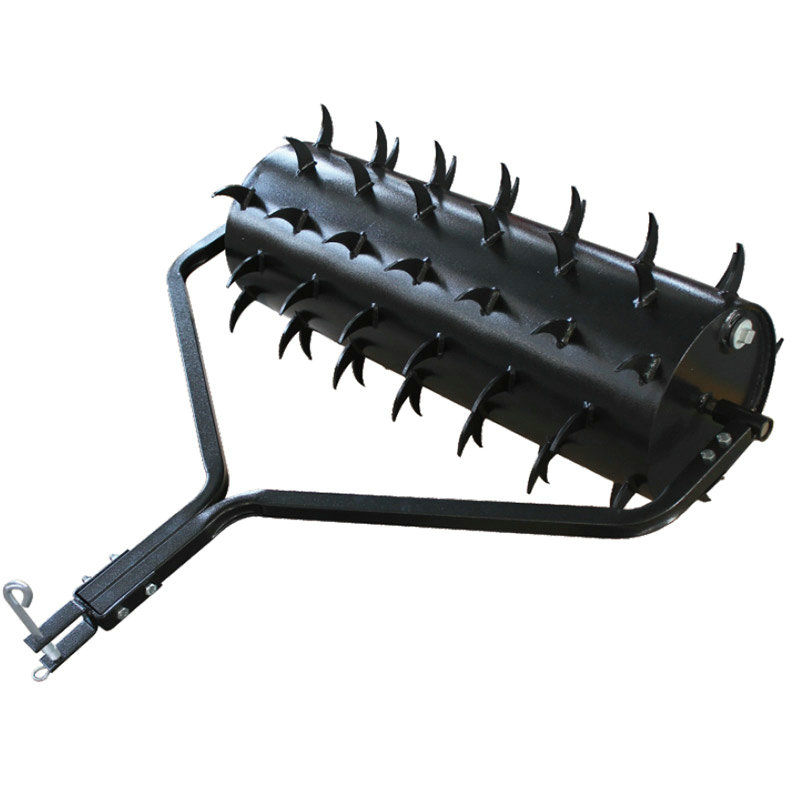
DESCRIPTION ♦Helps nutrients get into the soil and down to the ...
See Details -
DESCRIPTION ♦Helps nutrients get into the soil and down to the ...
See Details -
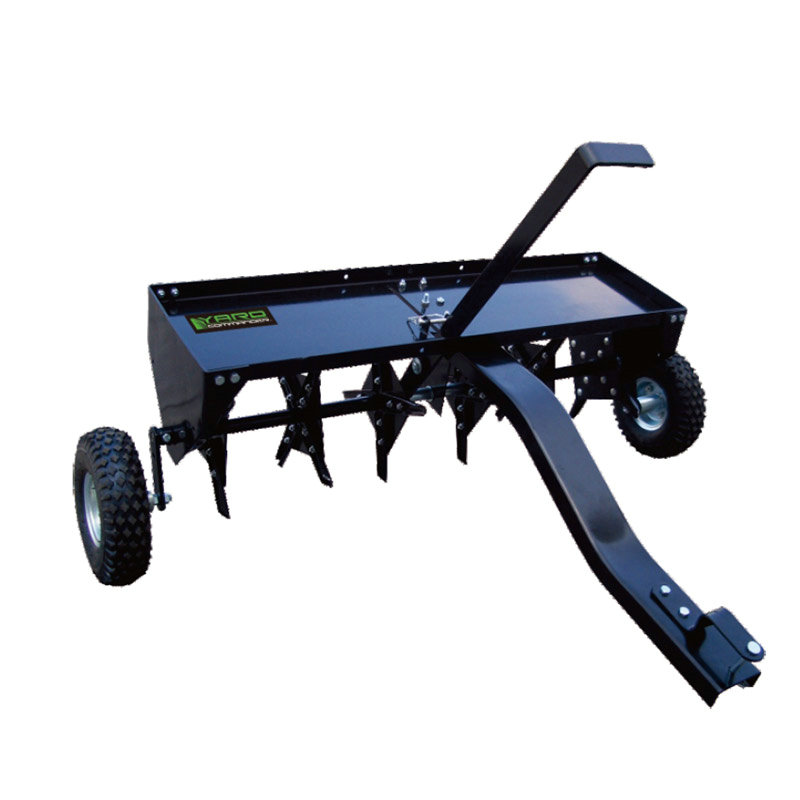
◆MODEL NO.: SP31106 ◆24 REPLACEABLE CORING POINTS ◆SINGLE-HAND LIFT LE...
See Details -
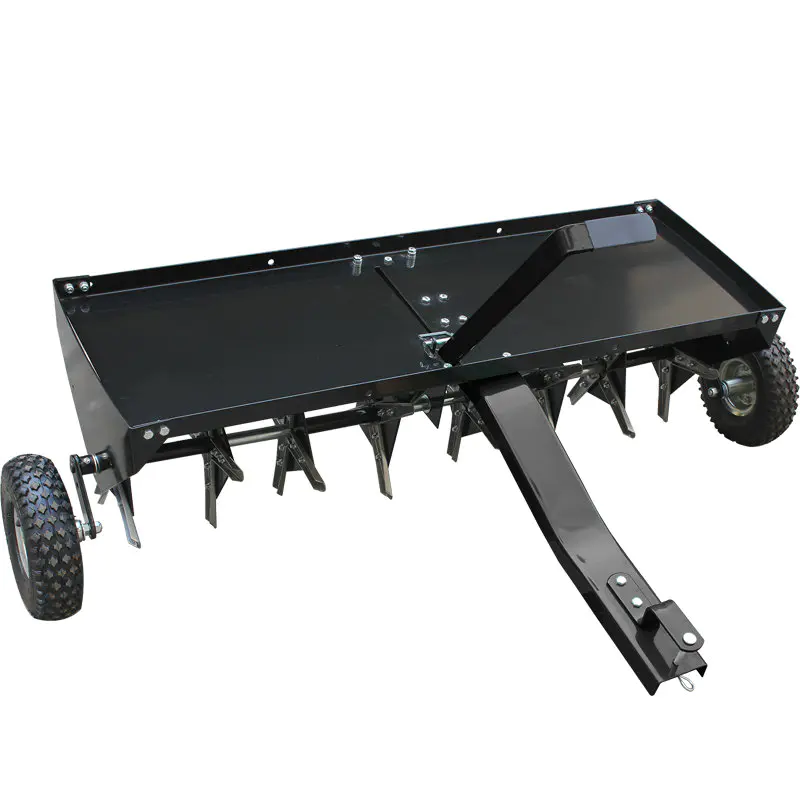
◆MODEL NO.: SP31102 ◆32 REPLACEABLE CORING POINTS ◆SINGLE-HAND LIFT LE...
See Details -
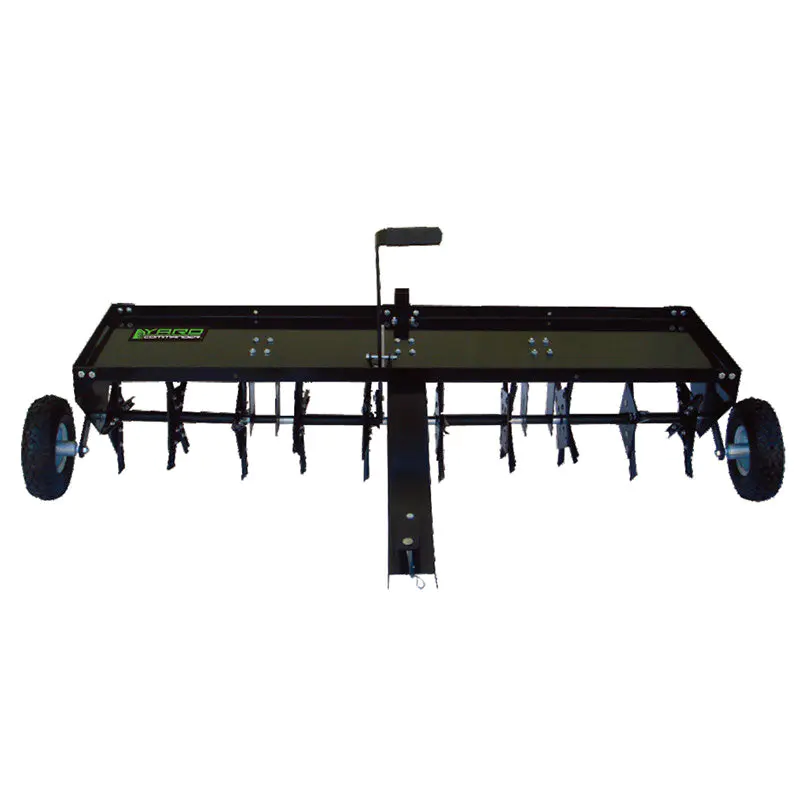
◆MODEL NO.: SP31202 ◆40 REPLACEABLE CORING POINTS ◆SINGLE-HAND LIFT LE...
See Details
