
 LANGUAGE
 English
 Deutsch
 Español
 Français
 русский










●60-Volt Brushless MotorThis reliable motor is highly efficient provid...
See Details
25 Ton Wood Splitter Buying Guide: Power, Types, and Real-World Use Cases
Most people who search for a 25 ton wood splitter are either replacing a smaller machine or buying their first serious splitter. The question is rarely whether the machine can split wood. It will. The real question is whether it can handle the specific hardwood you have, at the pace you need, with a power source that suits your work site. The 25-ton class sits squarely in the middle of the splitter market: enough force for most hardwood, portable enough for one operator, and simpler to maintain than a commercial 35-ton machine.
25 tons Max hydraulic force
16-20 inches Hardwood capacity
10-12 seconds Typical cycle time
What a 25 Ton Rating Really Means
The 25-ton rating describes the maximum force the hydraulic cylinder applies to the splitting wedge. It is not a measure of engine horsepower or a direct indication of log diameter. A common 25-ton hydraulic system uses a 5-inch bore cylinder at roughly 2,500 psi, which produces close to 50,000 pounds of pushing force on the wedge.
That force translates directly into log capacity. In everyday use, a 25-ton splitter can push a blade through:
- 24-28 inch logs in softwoods like pine, spruce, and poplar
- 16-20 inch logs in hardwoods like oak, maple, and ash
- 12-14 inch logs in dense, knotty wood like hickory or twisted grain
| Wood Type | Maximum Diameter | Passes Usually Needed |
|---|---|---|
| Pine / Spruce | 24-28 in | 1 |
| Ash / Elm | 18-22 in | 1 |
| Oak / Maple | 16-20 in | 1 |
| Hickory / Knotty Oak | 12-14 in | 1-2 |
Wedge angle also affects how much force is actually needed. A steep wedge concentrates force at a single point and splits cleaner in dense wood, but it requires more tonnage than a flat wedge. A flat wedge is easier for the cylinder to push but can tear fibers instead of splitting them. This is why some manufacturers offer interchangeable wedges for different wood types.
Tonnage alone does not tell you how fast the machine works. Cycle time depends on hydraulic pump flow rate, cylinder stroke length, and valve speed. A 25-ton splitter with a 22 GPM pump can complete a full cycle in 10-12 seconds, while a machine with an 11 GPM pump may take 20 seconds or more. That difference matters when you are splitting a full cord of firewood.
A frequent misconception is that a larger engine creates more splitting force. In a hydraulic splitter, the engine drives the pump, and the pump creates pressure. The force on the wedge is determined by the cylinder bore area. This is why a 6.5 HP engine can still deliver 25 tons of force when the cylinder is properly matched to the pump.
Gas, PTO, or Battery: Choosing the Right Power Source
The 25-ton class is available in three power configurations. Each fits a different work site, and choosing between them is usually the most important buying decision you will make.
Gas Full-Beam
A gas-powered full-beam splitter is the standard choice for remote woodlots, farms, and any site without a fixed power supply. The engine drives the hydraulic pump, and the full-beam frame keeps logs aligned through the entire cylinder stroke. This is why high-volume firewood producers usually pick a gas full-beam model.
Forest King 25-Ton Rapid Log Splitter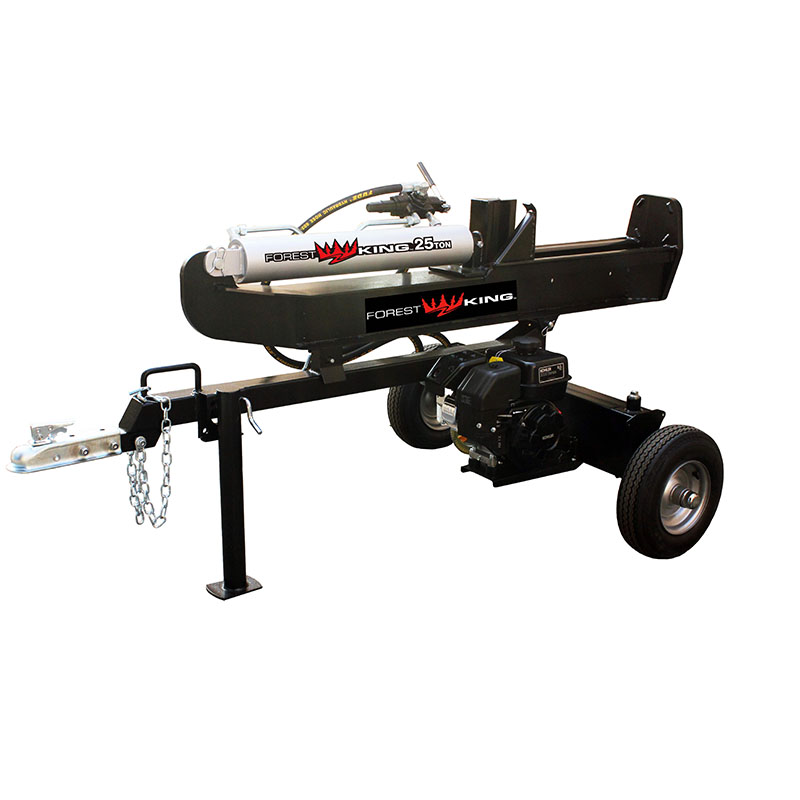 Gas-Powered 25-Ton Full-Beam Log Splitter with Kohler EngineThis gas-powered full-beam splitter is ideal for remote woodlots and farms. It splits horizontally or vertically, features an 11.5-second cycle time, and is powered by a reliable Kohler engine.View Product →
PTO-Powered
If you already own a compact or utility tractor, a PTO-driven 25-ton splitter eliminates the cost of a separate engine. The tractor's PTO shaft rotates the hydraulic pump, so you maintain only one power source and can take advantage of the tractor's weight and mobility. PTO models are often the lightest 25-ton option in the market.
25-Ton PTO Log Splitter 25-Ton PTO Log Splitter for Compact TractorsThis PTO-driven splitter uses your tractor's power, eliminating the need for a separate engine. It is lightweight and mobile, making it a cost-effective choice for tractor owners.View Product →
Battery-Powered
Battery-powered 25-ton splitters are a newer category that has expanded quickly. They run quietly, emit no exhaust, and can be used near barns or in residential garden areas where a gas engine would create a disturbance. The tradeoff is battery weight and recharge time, so they work best in moderate-volume scenarios.
25-Ton Battery-Powered Log Splitter Battery-Powered 25-Ton Log Splitter Quiet OperationThis battery-powered splitter runs quietly with no emissions, perfect for residential areas. Its 60V brushless motor and push-button start offer convenient, low-maintenance operation for moderate workloads.View Product →
Compare the three options side by side: a gas splitter is fully mobile but needs fuel and regular maintenance. A PTO splitter is lighter and uses the tractor's engine but requires the tractor to be present at the woodpile. A battery splitter is quiet but has limited run time per charge. Base your decision on where you split most of your wood and whether a tractor is already available.
Key Specifications That Determine Real Performance
Do not select a 25-ton splitter based on the tonnage rating alone. The following specifications decide how productive the machine will be over a full day of work.
- Cylinder bore and stroke: A 5-inch bore cylinder delivers closer to the full 25-ton rating. Stroke length matters for log length. A 24-inch stroke handles typical firewood lengths, and a 30-inch stroke is better for longer rounds.
- Hydraulic pump flow rate: Higher GPM means faster cycle time. For the 25-ton class, look for pumps in the 13-22 GPM range. The gap between an 11 GPM and a 22 GPM pump can nearly double your daily output.
- Wedge height and design: A 6-8 inch wedge height pushes through a wider log in one pass. A taller wedge with a steep angle requires more force but splits cleaner on dense hardwood.
- Beam design: Full-beam and half-beam designs differ in how they guide logs. Full-beam frames prevent the log from twisting off-axis, while half-beam models are lighter and easier to maneuver.
- Engine displacement: On gas models, engine horsepower does not directly translate into splitting force. It determines how quickly the pump can move hydraulic fluid. A 6.5-13 HP engine is common in the 25-ton class.
To estimate your required tonnage, multiply the diameter of your largest hardwood log in inches by roughly 1.3. For a 20-inch oak log, that comes to about 26 tons. A 25-ton machine gives you a small safety margin on that calculation, which means you will not have to work at the absolute limit of the hydraulic system.
A practical rule: choose a 25-ton splitter with the highest pump flow rate you can afford. Fast cycle time has a bigger impact on your day than a few extra tons on the wedge.
Frequently Asked Questions
Q1: Can a 25 ton wood splitter split knotty or crotchy wood?
Yes, with a caveat. A 25-ton machine will split most knotty wood if the log has reasonably straight grain. Crotchy or twisted grain can deflect the wedge, and you may need to rotate the log or make multiple partial cuts. A taller wedge and full-beam frame improve stability in tough grain.
Q2: How much firewood can a 25 ton splitter process in a day?
With a 10-12 second cycle time, one operator can realistically split 3-5 full cords in a workday, assuming the logs are already bucked to length. Higher pump flow rates and dual-action return cycles push that number higher.
Q3: Is a 25 ton splitter too much for home use?
Not necessarily. The tradeoff is weight and cost. If you only split 2-3 cords per year of softwood, a 20-ton machine may be enough. If you process hardwood, knotty wood, or plan to expand your operation, the 25-ton class is a reasonable investment that will not struggle on difficult rounds.
Q4: How long does a well-maintained 25 ton splitter typically last?
With regular hydraulic fluid changes and seal replacement, a 25-ton splitter can serve for 10-15 seasons in residential use. The hydraulic seals are usually the first component to wear, often after 5-8 seasons. Replacing seals and hoses proactively prevents damage to the pump and cylinder, which are far more expensive to repair.
PREV:No previous article
NEXT:50 Ton Wood Splitter Buying Guide: Power, Cycle Time, and What to Check
NEXT:50 Ton Wood Splitter Buying Guide: Power, Cycle Time, and What to Check
Interested in cooperation or have questions?
Related products
-
-

● 20-ton Splitting ForceCapable of splitting logs 21”/ 53cm ng with a ...
See Details -
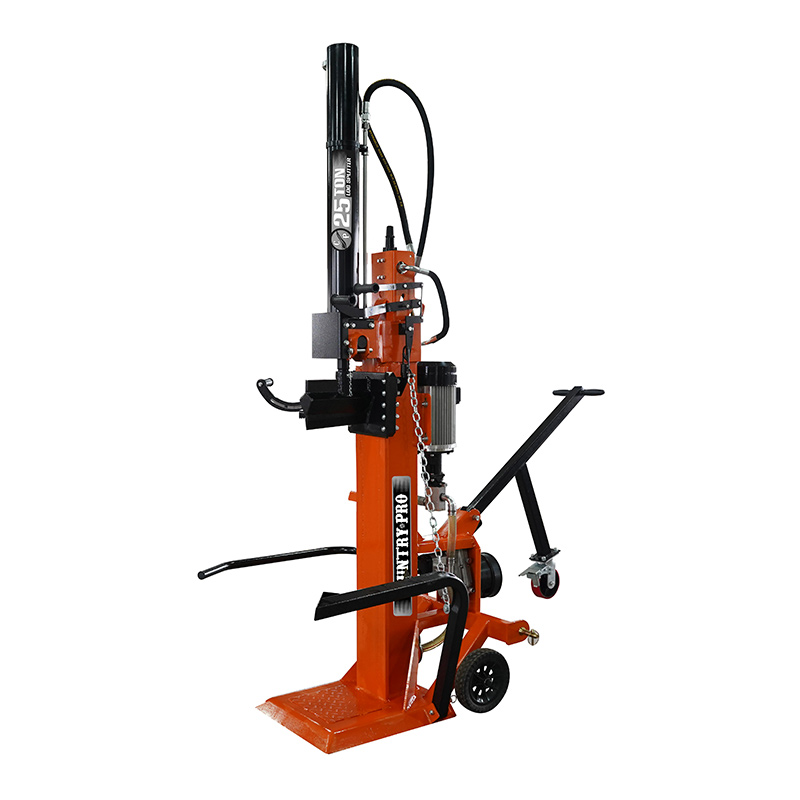
Vertical operation position onlyHardened steel wedge43.3” / 110cm log ...
See Details -
● Rust resistant powder coat finish ● Accessories: screen &rain co...
See Details -
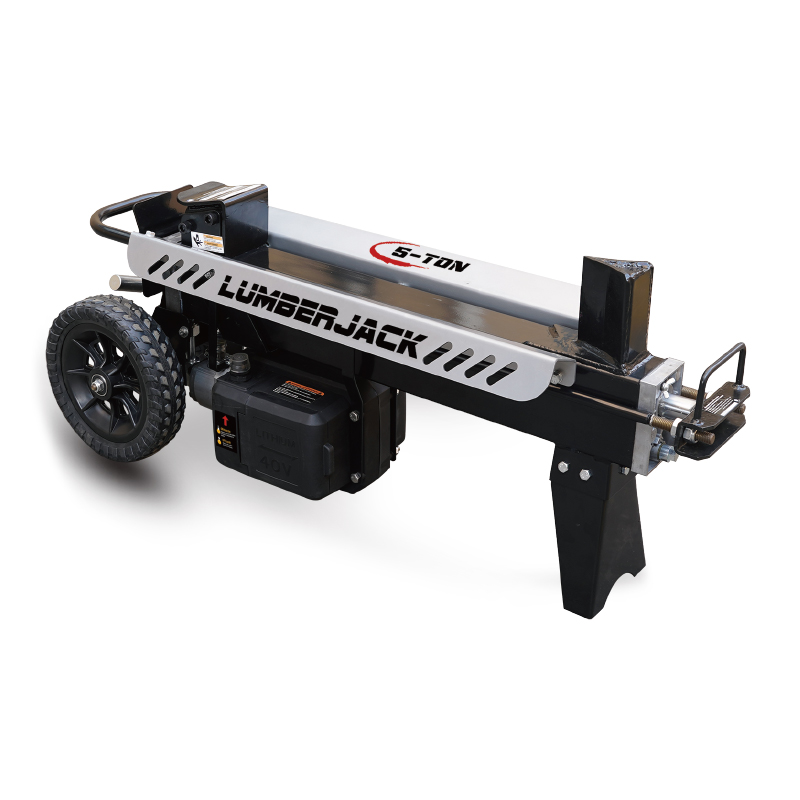
●40-Volt Brushless MotorThis reliable motor is highly efficient provid...
See Details -
MODEL NO.: SP 22150 Removable rails and tailgate make hauling convenie...
See Details
