In the field of material handling, push spreaders play a pivotal role in ensuring efficient and precise distribution of a variety of materials across surfaces. These devices are commonly used in industries like agriculture, construction, landscaping, and manufacturing. Push spreaders are designed to handle an array of materials, each with unique properties and challenges. Understanding how different types of materials—such as granular and powdered substances—are managed by push spreaders is crucial for selecting the right equipment and optimizing operational efficiency.
The Engineering Fundamentals of Push Spreaders
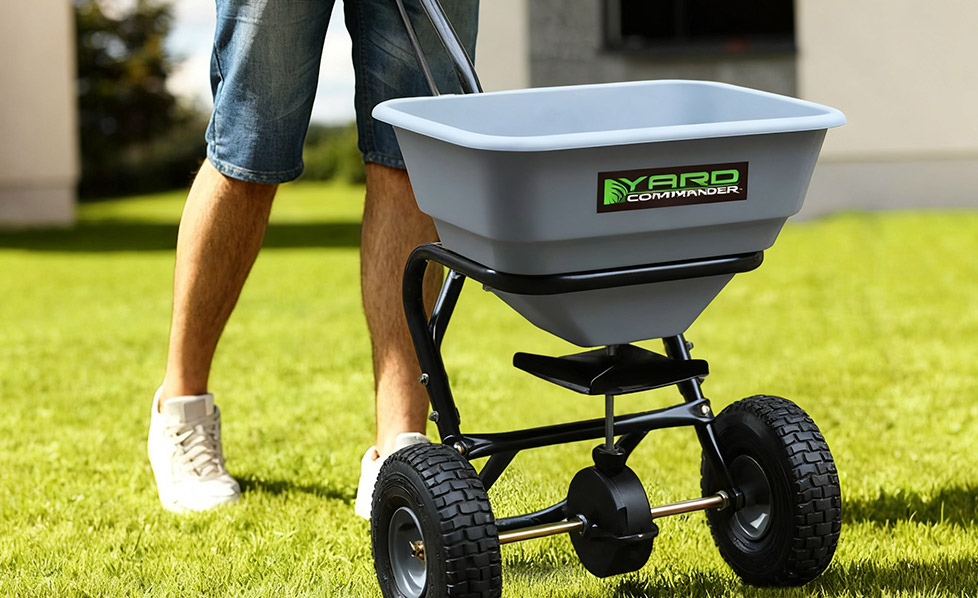
Before delving into material-specific handling, it is important to understand the basic design and functionality of push spreaders. Typically, push spreaders consist of a hopper, a spreading mechanism (often a rotating disk or a series of wheels), and an adjustable flow control. These components work together to ensure uniform material distribution.
-
Hopper Design: The hopper holds the material to be spread, and its design must allow for smooth material flow. For granular materials, the hopper often has a mesh or perforated design to prevent clogs. In contrast, powdered materials may require a sealed hopper to reduce airborne particles.
-
Spreading Mechanism: The spreading mechanism is responsible for dispersing the material. In granular materials, the disk or wheels are typically adjusted to ensure that particles are thrown in a controlled, uniform manner. For powdered materials, a finer mesh or a different spreading mechanism may be employed to minimize waste and improve precision.
-
Flow Control System: The flow control system regulates the rate at which material is fed from the hopper to the spreading mechanism. For both granular and powdered materials, an adjustable flow rate is essential for ensuring that the correct amount of material is spread without over-application or uneven distribution.
Handling Granular Materials
Granular materials, such as fertilizers, seeds, sand, and salt, present unique challenges when distributed using push spreaders. These materials have varying particle sizes, densities, and flow properties that require different handling techniques.
Material Flow and Uniformity
Granular materials tend to flow more easily than powders, but they can still be challenging to spread uniformly, especially when the particles are irregular in size. A key factor in handling granular materials is ensuring that the spreader mechanism can accommodate varying particle sizes without causing blockages or uneven distribution.
-
Spreader Disk Design: The spreader disk is often fitted with vanes that help direct the flow of granular materials. These vanes are typically adjustable to allow for customized spreading patterns, depending on the material’s size and weight.
-
Vibration Mechanism: Some push spreaders employ vibration systems to help ensure a continuous flow of granular materials. This vibration helps prevent clogging in the hopper and improves the consistency of the material being spread.
-
Flow Rate Control: The flow control system must be set to regulate the speed and amount of material dispensed. For granular substances, this involves adjusting the aperture size at the bottom of the hopper and the speed at which the material is fed to the disk or wheels.
-
Granular Material Types: Different granular materials have varying properties. For example, coarse sand may require a higher flow rate and faster spreading speed, while fertilizers or seeds may need slower, more controlled distribution to prevent waste and ensure even coverage.
Environmental Factors and Their Impact
Granular materials, particularly those like fertilizers and seeds, are often distributed outdoors. Environmental factors such as wind, humidity, and temperature can significantly impact the performance of a push spreader when handling granular materials.
- Wind: Wind can cause uneven distribution of granular materials. To mitigate this, the spreader’s design should incorporate wind guards or shields to minimize material loss and ensure uniform spread.
- Humidity: High humidity can cause some granular materials to clump together, which can clog the hopper. This is particularly common with salt or fertilizers that attract moisture. Spreader hoppers with moisture-resistant features can prevent this issue.
Handling Powdered Materials
Powdered materials, such as lime, gypsum, or industrial powders, present different challenges than granular materials due to their fine, dust-like consistency. These materials tend to flow less predictably and can be easily affected by air currents.
Material Flow and Dispersion
The flow characteristics of powdered materials make them more susceptible to clogging and uneven distribution. Push spreaders designed for powdered materials often feature specialized systems to ensure smooth and even material flow.
-
Closed Hopper Design: To prevent powdered materials from escaping or becoming airborne, closed hopper designs with sealed lids are often used. This helps contain the material and reduces the chances of waste due to dispersion in the air.
-
Feeding System: The feeding system for powdered materials typically includes finer controls to regulate material flow. Since powders tend to form clumps, spreaders may incorporate agitators or vibratory mechanisms to break up these clumps and promote smooth flow.
-
Spreader Mechanism Adjustments: The spreader mechanism for powders often includes a finer mesh or modified disk design that can handle smaller particles without clogging. Additionally, the spreader may be designed to operate at slower speeds to ensure controlled and uniform distribution.
-
Fine Powder Dispensing: Powdered materials may require a low and controlled dispensing rate. Over-applying fine powders can result in waste, as well as potentially hazardous conditions (e.g., dust inhalation). Push spreaders with adjustable flow systems allow for precise control over how much powder is dispensed at any given time.
Environmental and Operational Considerations
Powdered materials are more sensitive to environmental conditions such as wind and humidity. Because of their fine nature, powders are more likely to be carried away by air currents. Therefore, additional measures should be taken to ensure the efficient use of the material.
- Wind: Wind is the most significant environmental factor when working with powdered materials. Wind shields or deflectors on the push spreader can reduce the amount of powder lost to air currents.
- Dust Control: To minimize the inhalation risks associated with powdered materials, push spreaders may include integrated dust control systems. These can include sealed hoppers or dust-capturing mechanisms.
Comparison of Granular and Powdered Material Handling
The table below compares the key aspects of handling granular and powdered materials using push spreaders:
| Aspect |
Granular Materials |
Powdered Materials |
| Material Flow |
Easier to manage, but can vary with size |
More prone to clumping and uneven flow |
| Feeding Mechanism |
Adjustable flow rate and disk speed |
Finer control, often includes vibration |
| Spreader Disk |
Larger vanes for even spread |
Modified disks or finer mesh for powder |
| Environmental Factors |
Affected by wind, humidity, and temperature |
Highly sensitive to wind, requires dust control |
| Clogging Potential |
Less prone to clogging, unless fine particles |
High risk of clogging without vibration/agitation |
| Material Waste |
Minimal if spread correctly |
Higher risk of waste due to airborne particles |
| Speed of Operation |
Faster spreading in large areas |
Slower, more controlled operation necessary |
Conclusion
Push spreaders are versatile tools used to handle a wide range of materials, from granular substances to fine powders. The design and functionality of the spreader must be carefully tailored to accommodate the specific flow and distribution requirements of each material type. By understanding the unique characteristics of granular and powdered materials, engineers can optimize the spreader’s performance, reduce material waste, and enhance operational efficiency.
FAQ
Q1: What is the best type of push spreader for granular materials?
A1: The best push spreader for granular materials would feature a robust spreading mechanism, adjustable flow controls, and a hopper that prevents clogging. A vibrating mechanism can also help improve material flow.
Q2: How can I prevent dust from powdered materials when using a push spreader?
A2: Using a closed hopper design with a dust control system or wind shields can help minimize the dispersal of fine powders into the air.
Q3: Can push spreaders handle both granular and powdered materials?
A3: Yes, but the design of the spreader must be adjusted to suit the specific properties of each material type. Granular materials typically require larger vanes, while powdered materials benefit from finer mesh systems and slower dispensing rates.
Q4: What impact does humidity have on the performance of a push spreader?
A4: Humidity can cause granular materials like salt or fertilizer to clump together, potentially clogging the spreader. Moisture-resistant hopper designs can mitigate this issue.
References
- [Push Spreader Design and Operation Principles]
- [Handling Granular Materials in Material Distribution Systems]
- [Powdered Material Handling in Industrial Applications]

 LANGUAGE
 English
 Deutsch
 Español
 Français
 русский