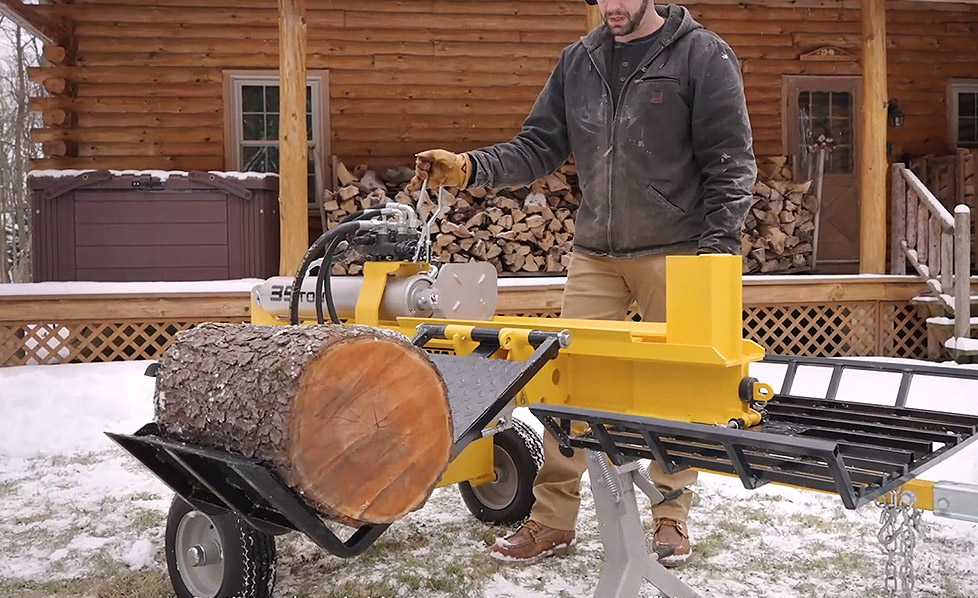
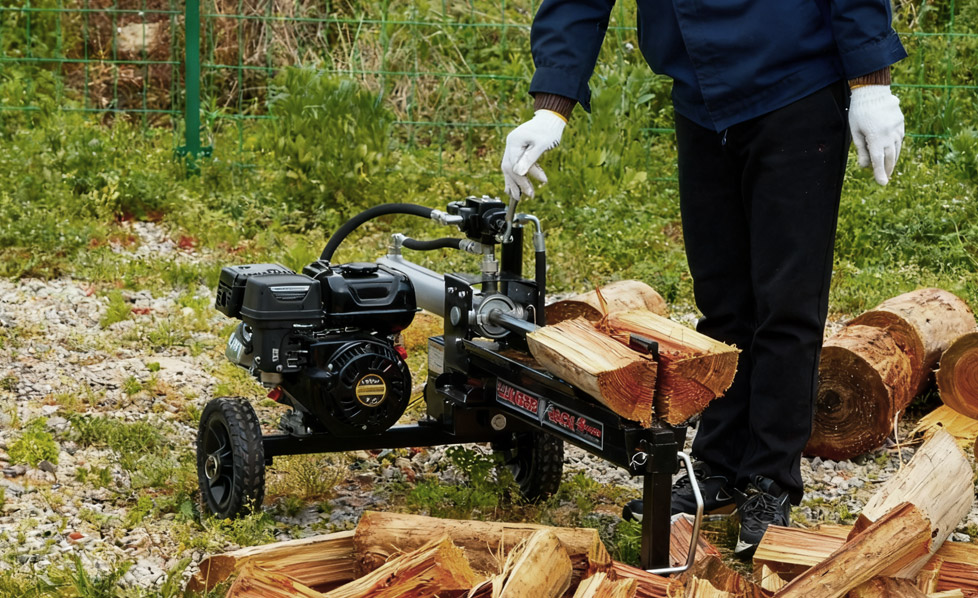
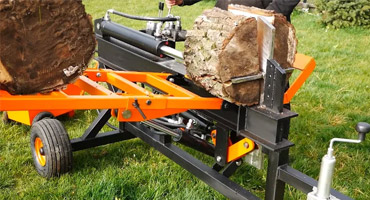
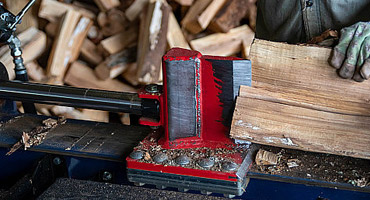
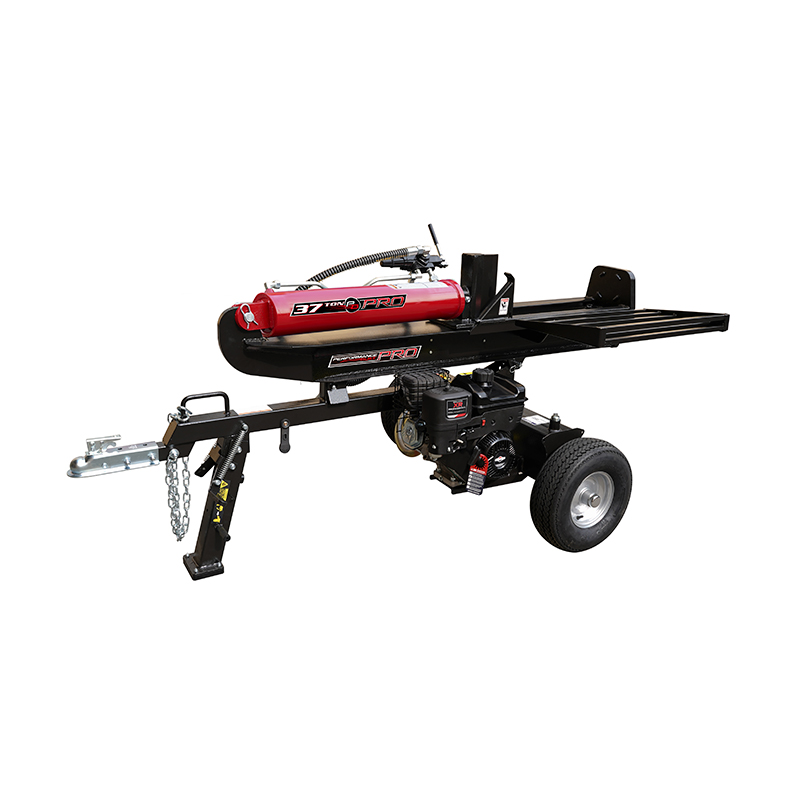
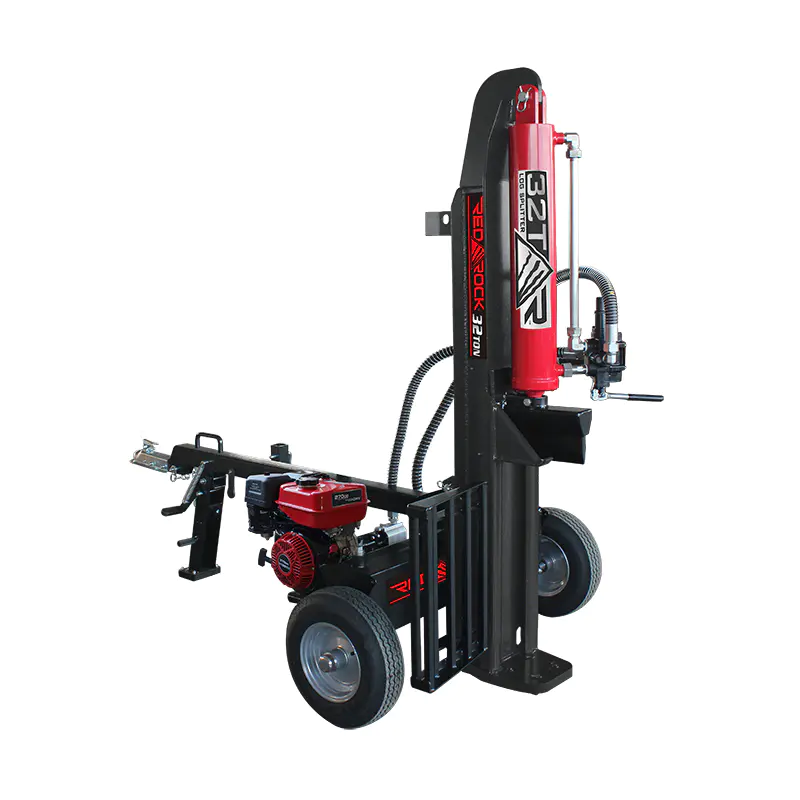
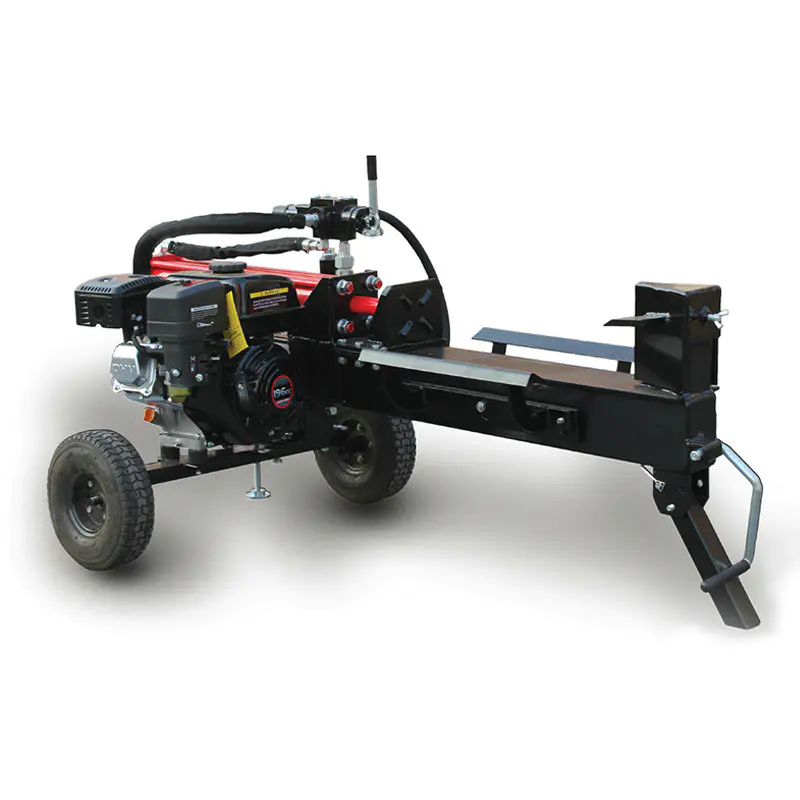
Gasoline log splitters are an essential piece of equipment in the wood processing and forestry industries, providing an efficient solution for splitting logs. These machines come in different designs, each offering its own advantages depending on the application. Two of the most common configurations are the single-beam and full-beam designs. While both are used for the same purpose, their structural differences lead to variations in performance, handling, and suitability for different tasks.
1. Structural Design: A Comparative Analysis
Single-Beam Design
The single-beam gasoline log splitter features a simpler design, with a single central beam acting as the support structure for both the splitting wedge and the hydraulic mechanism. The beam typically extends through the length of the splitter and houses all the key components required for operation.
Advantages:
- Compact design: Due to the single beam, this type of log splitter is usually more compact and can be easier to transport and store.
- Lower manufacturing costs: The design simplicity often leads to a more cost-effective product.
- Lightweight: The single-beam structure makes these models lighter, which can be beneficial when mobility is a key consideration.
Limitations:
- Less stability: The single-beam configuration may provide less structural support, leading to reduced stability during operation, especially when splitting larger or tougher logs.
- Lower splitting power: The design of the beam can limit the power and force applied by the splitter, especially in high-load situations.
Full-Beam Design
In contrast, the full-beam gasoline log splitter features a more robust and extensive beam system that covers the entire width and length of the machine. This configuration is engineered to distribute the force of the hydraulic system more evenly across the structure, offering increased stability.
Advantages:
- Enhanced stability: The full-beam design provides a much more stable framework, making it ideal for splitting larger or more challenging logs.
- Higher splitting force: With a more substantial structure, full-beam log splitters can often handle larger logs with greater ease, enabling the application of higher splitting forces.
- Better durability: The additional structural support and more robust design often result in a more durable machine, capable of withstanding heavy-duty use in commercial environments.
Limitations:
- Bulkier: Full-beam splitters are typically larger and heavier, which can limit their portability.
- Higher manufacturing costs: The added complexity and material requirements result in higher production costs, making full-beam models more expensive than their single-beam counterparts.
- Storage challenges: Due to their larger size, full-beam models may require more storage space when not in use.
2. Performance and Efficiency: A Systems Approach
Hydraulic Efficiency
The hydraulic system in a gasoline log splitter is crucial for providing the force necessary to split logs. In both single-beam and full-beam designs, the hydraulic pump generates high pressure that powers the splitting wedge. However, the efficiency of the system can vary based on the structural design of the splitter.
-
Single-Beam Systems: In these machines, the hydraulic force is typically concentrated in a smaller area, which can sometimes lead to inefficiencies when splitting larger logs. The narrower beam design may also affect the accuracy of the force distribution, potentially leading to uneven splitting.
-
Full-Beam Systems: The full-beam design offers better hydraulic force distribution due to its broader and more robust framework. This allows the machine to apply consistent pressure across the entire beam, increasing splitting efficiency and reducing the likelihood of jams or uneven cuts.
Splitting Speed
Splitting speed is another factor that engineers often consider when choosing between single-beam and full-beam log splitters.
-
Single-Beam: These models tend to have a quicker cycle time due to their lighter design and fewer structural components. However, the tradeoff is that they may not be able to handle large or very tough logs as efficiently, reducing overall performance in challenging tasks.
-
Full-Beam: Although the splitting speed of full-beam log splitters might be slightly slower due to the heavier design, they compensate for this by handling larger logs in fewer cycles. Their higher power and stability make them better suited for high-volume operations.
3. Handling and Maneuverability
Single-Beam Design
Single-beam log splitters excel in terms of maneuverability due to their lightweight and compact design. They are easier to move around, which makes them ideal for smaller-scale operations or applications that require frequent transportation of the machine.
Full-Beam Design
While full-beam log splitters are less maneuverable, their increased stability and splitting power make them more suited for stationary, heavy-duty operations. These machines are typically used in environments where mobility is less important than splitting performance, such as sawmills or larger wood processing facilities.
4. Maintenance and Durability
Single-Beam Design
- Maintenance: The simpler design of single-beam log splitters often translates to easier maintenance. With fewer parts and a more straightforward structure, technicians can perform routine repairs and inspections more quickly.
- Durability: However, the reduced structural integrity may lead to quicker wear and tear, especially in demanding environments.
Full-Beam Design
- Maintenance: Full-beam log splitters, due to their more complex structure, may require more time and attention when performing maintenance. However, the additional robustness often leads to fewer breakdowns in high-demand situations.
- Durability: Full-beam models are built to withstand the rigors of high-frequency use, offering longer lifespans and greater resistance to heavy impacts.
5. Cost Considerations
Single-Beam Design
- Initial Cost: Single-beam log splitters are typically more affordable, making them a good option for smaller businesses or individuals with lower budgets.
- Operating Costs: Due to their lighter build and lower power, these machines may incur higher operating costs in the long run if they are used for heavy-duty tasks.
Full-Beam Design
- Initial Cost: Full-beam log splitters come with a higher initial price tag, due to their superior build and increased splitting power.
- Operating Costs: While these machines may cost more upfront, their enhanced durability and efficiency often result in lower operating costs over time, especially in high-volume applications.
6. Summary of Differences
| Feature |
Single-Beam Gasoline Log Splitter |
Full-Beam Gasoline Log Splitter |
| Design Complexity |
Simple, compact |
Robust, large, more complex |
| Stability |
Lower |
Higher |
| Hydraulic Efficiency |
Lower, more concentrated force |
Higher, better force distribution |
| Splitting Power |
Lower, better for small to medium logs |
Higher, suitable for large logs |
| Portability |
Easier to move and store |
Bulkier, less portable |
| Maintenance |
Easier to maintain |
Requires more maintenance, more durable |
| Cost |
Lower initial cost |
Higher initial cost but better long-term value |
Frequently Asked Questions (FAQ)
1. Which is better for small-scale operations, a single-beam or full-beam log splitter?
- A single-beam log splitter is often more suitable for small-scale operations due to its compact size, lower cost, and easier mobility. However, it may not perform well with larger or tougher logs.
2. Can a full-beam log splitter be used for home use?
- Yes, while full-beam log splitters are generally designed for commercial use, they can be used for home purposes if larger logs need to be split. However, their bulkier design may be a consideration for some homeowners.
3. How does the hydraulic pressure affect the performance of a gasoline log splitter?
- Higher hydraulic pressure typically results in greater splitting power. Full-beam log splitters often have a better hydraulic force distribution, enabling them to handle larger and denser logs with greater ease.
4. What is the maintenance schedule for a full-beam gasoline log splitter?
- The maintenance schedule for a full-beam gasoline log splitter should include regular checks on the hydraulic system, engine, and structural integrity. Due to its more complex design, maintenance may be required more frequently than for a single-beam model.
References
- “Log Splitter Hydraulic System Design and Efficiency,” Woodworking Machinery Journal, 2022.
- “Impact of Structural Design on Log Splitter Performance,” Engineering for Forestry and Wood Processing, 2023.
- “Hydraulic Systems in Gasoline Log Splitters: Best Practices,” Technical Maintenance Guide for Woodworking Equipment, 2021.

 LANGUAGE
 English
 Deutsch
 Español
 Français
 русский