
 LANGUAGE
 English
 Deutsch
 Español
 Français
 русский
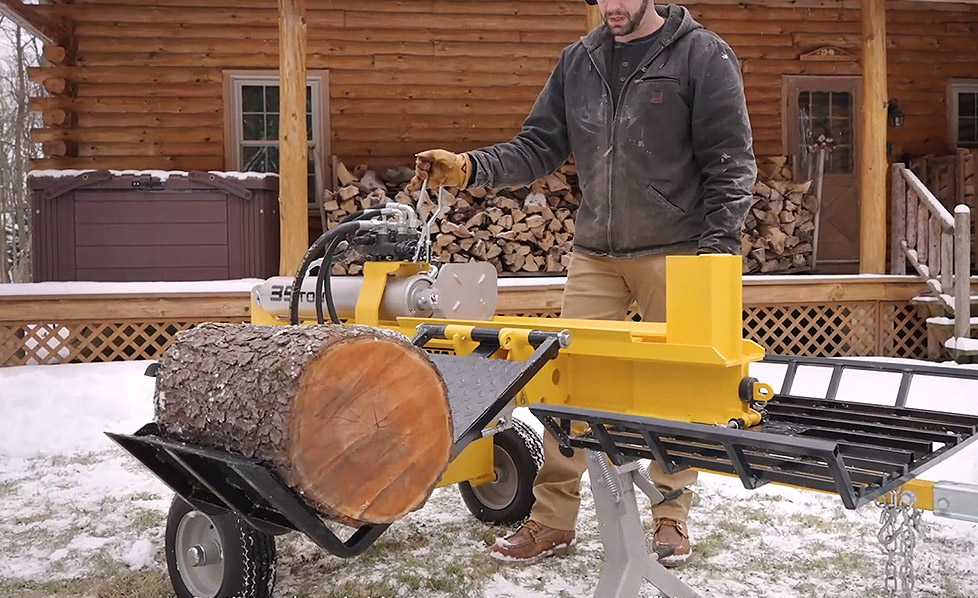
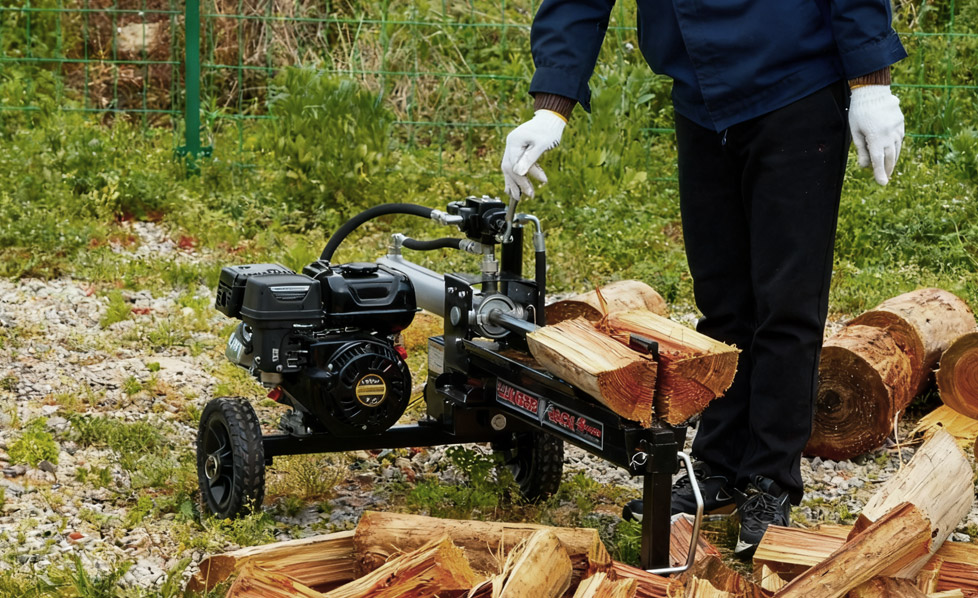









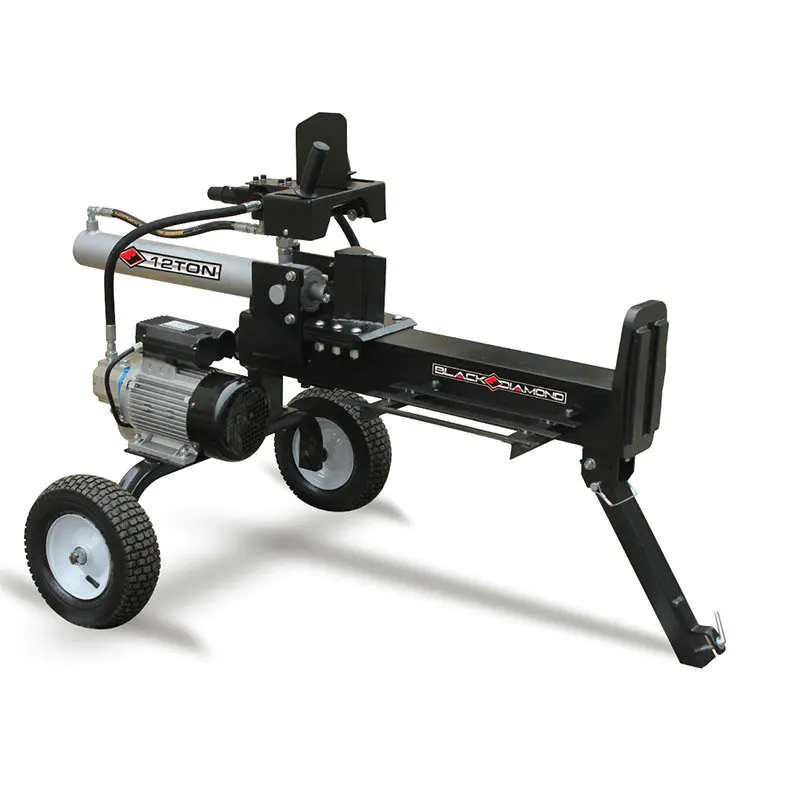
DESCRIPTION Vertical or horizontal operating position lets you work mo...
See Details
How to Choose the Right Log Splitter for Your Firewood Volume and Wood Type
Why Log Splitter Selection Depends on More Than Just Power
A log splitter is often judged only by its rated tonnage, but tonnage alone rarely tells the full story. Two units rated at 20 tons can behave very differently depending on cylinder stroke length, cycle time, beam length, and how the machine is powered. Choosing the wrong configuration usually shows up in one of two ways: either the machine stalls on knotty or wet rounds, or the owner overpays for capacity they never use.
The wood itself changes the math. A dry pine round splits with a fraction of the force needed for a green elm round of the same diameter, because moisture content and grain structure both resist the wedge differently. Species with interlocking grain, such as elm or sweetgum, can require nearly double the force of straight-grained species like ash or ordinary pine at the same diameter.
Practical takeaway: Sizing a splitter around your hardest, wettest, largest rounds prevents repeated re-splitting and cylinder strain, even if most of your wood is easier to process.
What Size Log Splitter Do You Actually Need
The question of how many tons a log splitter needs is best answered by combining three variables: average round diameter, wood species hardness, and moisture content at the time of splitting. A useful working approach is to treat these as multipliers rather than fixed numbers.
Baseline Tonnage by Round Diameter
| Round Diameter | Straight-Grain Softwood | Mixed Hardwood | Knotty or Interlocked Grain |
|---|---|---|---|
| Under 12 inches | 5 to 8 tons | 8 to 10 tons | 10 to 13 tons |
| 12 to 18 inches | 8 to 10 tons | 10 to 15 tons | 15 to 20 tons |
| 18 to 24 inches | 10 to 15 tons | 15 to 22 tons | 22 to 28 tons |
| Over 24 inches | 15 to 20 tons | 22 to 28 tons | 28 tons and above |
How Moisture Content Shifts the Requirement
Freshly cut, unseasoned wood can hold 40 to 60 percent moisture by weight, while wood seasoned for six to twelve months typically falls closer to 20 percent. Splitting green wood at the higher end of that range can demand roughly 20 to 30 percent more force than the same round once seasoned, because moisture adds both mass and fibrous resistance along the grain.
A Simple Tonnage Estimate Method
- Identify your largest typical round diameter, not the average, since occasional oversized rounds are what stall undersized machines.
- Classify the wood as straight-grain, mixed hardwood, or knotty and interlocked.
- Select the tonnage range from the table above.
- Add one tonnage tier of buffer if splitting mostly green or freshly felled wood.
For most residential users processing seasoned mixed hardwood in the 12 to 18 inch range, a 20 to 25 ton unit provides comfortable headroom without unnecessary cost or weight.
Types of Wood Splitters and Where Each One Fits
Beyond tonnage, the mechanical layout of a splitter changes how it performs in daily use. The main categories include beam-style gasoline units, dual action gasoline units, electric models, and tractor-mounted 3-point units.
Gasoline Full Beam Splitters
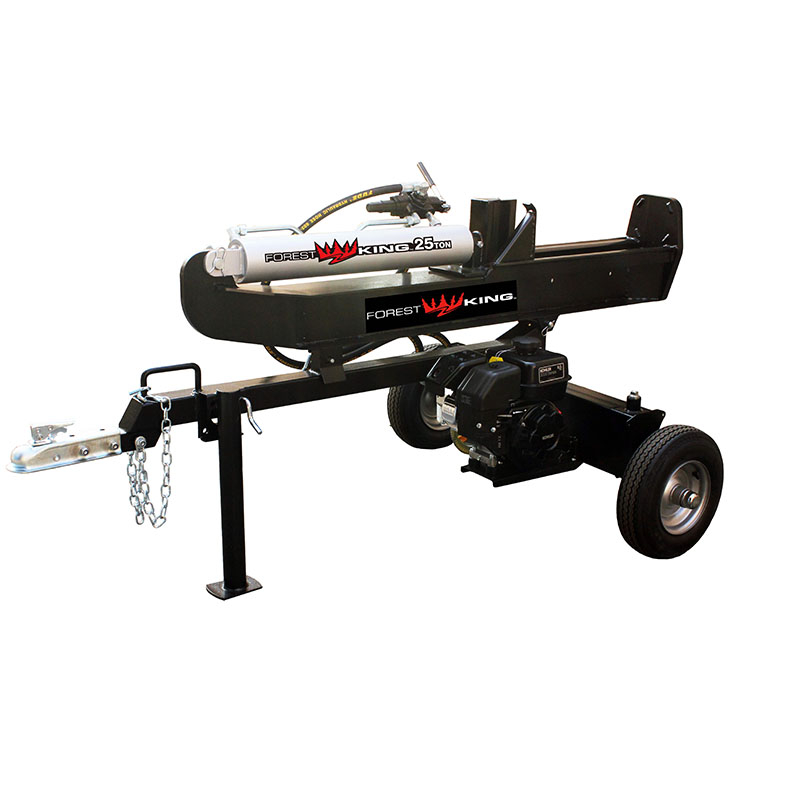
A gasoline log splitter full beam configuration uses a single continuous beam that supports the ram and log cradle along its entire length. This layout distributes stress evenly, which tends to reduce beam flex when splitting long or oversized rounds, making it a common choice for higher tonnage applications above 20 tons.
Gasoline Half Beam Splitters
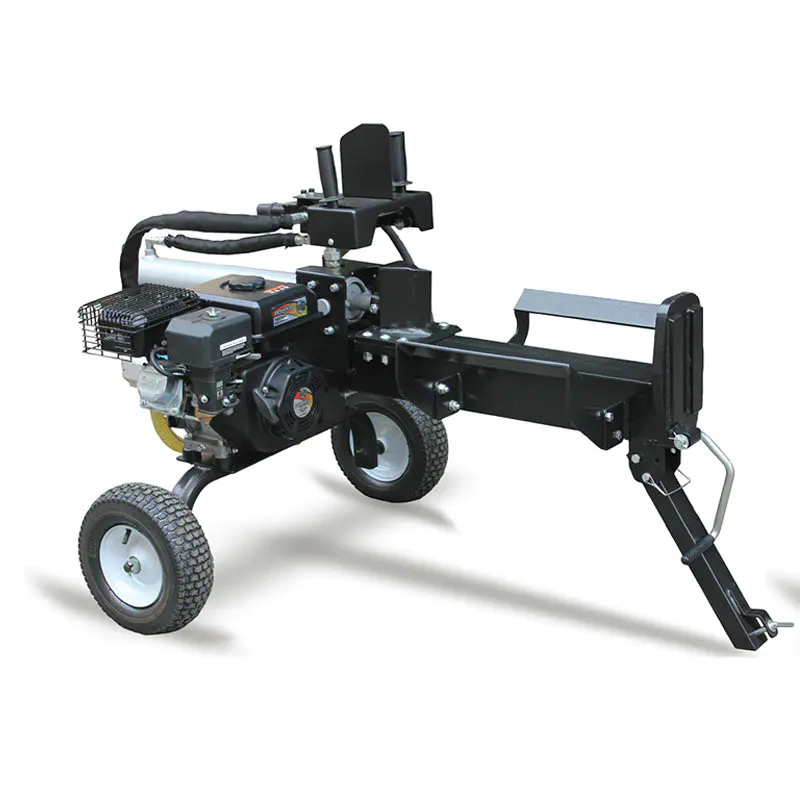
Half beam designs shorten the structural beam while keeping the same working stroke, which reduces overall machine weight and footprint. These units are generally positioned in the lighter to mid tonnage range, suiting operators who value portability and easier towing over maximum capacity.
Gasoline Dual Action Splitters
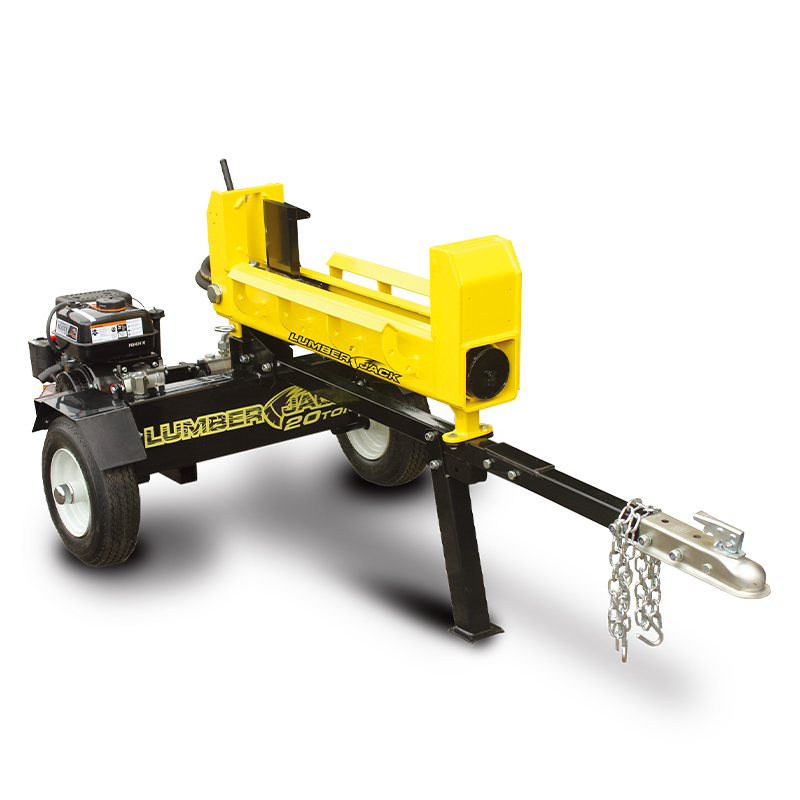
A dual action design splits wood on both the forward and return stroke of the ram, effectively cutting idle time per cycle. For operators processing high volumes, a gasoline log splitter dual action unit can noticeably shorten the total time spent per cord, since the return stroke is doing productive work instead of simply resetting.
Electric Splitters
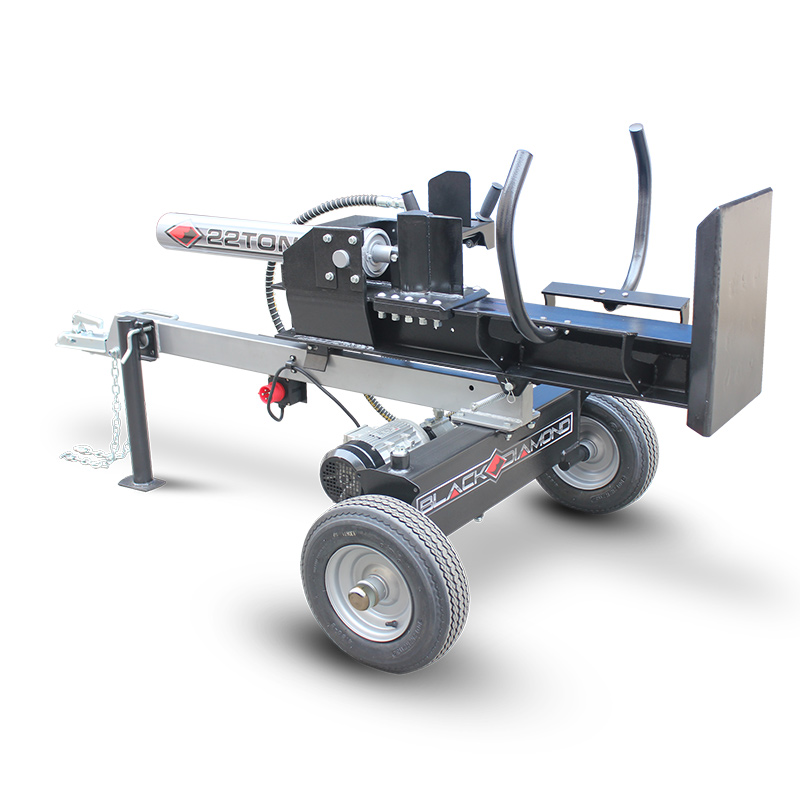
An electric log splitter trades outdoor-only operation for quieter, lower-maintenance use in garages, sheds, or other enclosed spaces where combustion exhaust is not practical. Because electric motors deliver consistent torque without idle warm-up, these units are well suited to shorter, more frequent splitting sessions rather than continuous multi-hour operation.
3-Point Tractor-Mounted Splitters
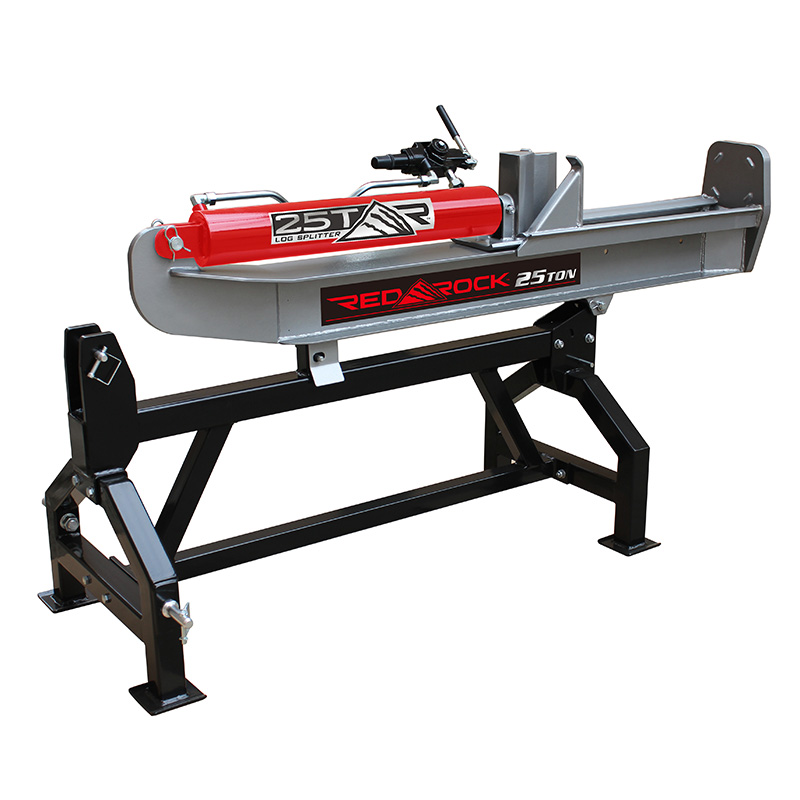
A 3PT log splitter attaches directly to a tractor's three-point hitch and draws hydraulic power from the tractor itself in most configurations, or runs its own PTO-driven pump. This eliminates the need for a separate engine, and because tractor hydraulics typically supply more sustained flow, these units often reach higher tonnage ratings than standalone consumer machines.
Hydraulic vs Kinetic Log Splitters
Nearly all beam-style and 3-point splitters use hydraulic cylinders, but kinetic flywheel designs exist as a distinct category worth understanding before you buy.
Hydraulic systems build pressure gradually through a pump and cylinder, producing a steady, controlled push that works well on knotty or irregular rounds because the force can be sustained through a stall point. Kinetic systems instead store energy in spinning flywheels and release it in a single rapid strike, which favors speed on straight-grained, uniform rounds but offers less recovery force if the wood momentarily resists the wedge.
Residential vs Commercial Log Splitter Requirements
Usage pattern changes the priority list. A homeowner splitting three or four cords a season has different tolerance for cycle time, noise, and duty cycle than a firewood processor running eight hours a day.
| Factor | Residential Use | Commercial Use |
|---|---|---|
| Typical Volume | 2 to 6 cords per season | Multiple cords per week |
| Duty Cycle | Intermittent, weekend use | Continuous, multi-hour sessions |
| Preferred Tonnage | 15 to 25 tons | 25 to 35 tons or higher |
| Cycle Time Priority | Moderate | High, directly affects output |
| Portability Priority | High | Lower, often stationary or trailer mounted |
Commercial operators typically favor full beam gasoline units or 3-point tractor-mounted units for their sustained hydraulic flow, while residential users more often find half beam gasoline or electric models sufficient for seasonal needs.
Electric vs Gas Log Splitter Comparison
The choice between an electric log splitter and a gasoline model usually comes down to environment and session length rather than raw tonnage.
| Attribute | Electric Log Splitter | Gasoline Log Splitter |
|---|---|---|
| Typical Tonnage Range | 4 to 15 tons | 10 to 37 tons |
| Indoor Use | Suitable | Outdoor only, exhaust output |
| Noise Level | Lower | Higher |
| Maintenance | Minimal, no fuel system | Regular fuel, oil, and filter checks |
| Continuous Operation | Limited by motor heat cycles | Extended run time on a full tank |
| Portability Without Power Source | Requires outlet or generator | Fully self contained |
Log Splitter Safety Features to Check Before Buying
- Two-hand operation controls that require both hands engaged away from the wedge path during the splitting stroke.
- Automatic ram return to reduce the chance of a hand being near the beam during reset.
- Log cradle or retention arms that keep rounds from rolling off the beam mid-cycle.
- Pressure relief valves that prevent hydraulic overload if the wedge meets an unusually resistant knot.
- Stable wheel base or hitch mounting so the unit does not shift under load, particularly on full beam units handling larger rounds.
A Simple Decision Path for Selecting Your Splitter
This path works for the majority of buyers: start from round size, adjust for species and moisture, land on a tonnage range, then let the environment and existing equipment decide the power source and beam configuration.
Frequently Asked Questions
Q1: What size log splitter do I need for typical firewood rounds?
For rounds between 12 and 18 inches in mixed hardwood, a 20 to 25 ton unit provides comfortable margin for most seasoned firewood without excess cost.
Q2: How many tons of log splitter do I need for green wood?
Add roughly one tonnage tier above the seasoned wood recommendation, since green wood can require 20 to 30 percent more force due to higher moisture content.
Q3: How big a log splitter do I need if I process oversized rounds occasionally?
Size the machine to your largest expected round rather than the average, since occasional oversized logs are the most common cause of stalling on undersized units.
Q4: What are the main types of wood splitters available?
The main categories are gasoline full beam, gasoline half beam, gasoline dual action, electric, and 3-point tractor-mounted splitters, each suited to different volume and environment needs.
Q5: Is a hydraulic or kinetic log splitter better for knotty wood?
Hydraulic systems generally handle knotty or interlocked grain better because they sustain pressure through resistance points, while kinetic systems favor speed on straighter grain.
Q6: Should I choose an electric or gasoline log splitter for home use?
Electric splitters suit shorter, quieter, indoor-friendly sessions, while gasoline splitters suit longer outdoor sessions and generally higher tonnage needs.
PREV:How to Split Logs Safely and Keep Your Splitter Running All Season
NEXT:How to Diagnose and Replace Log Splitter Parts: Hydraulic Valve Repair vs Full Cylinder Rebuild
NEXT:How to Diagnose and Replace Log Splitter Parts: Hydraulic Valve Repair vs Full Cylinder Rebuild
Interested in cooperation or have questions?
Related products
-
-
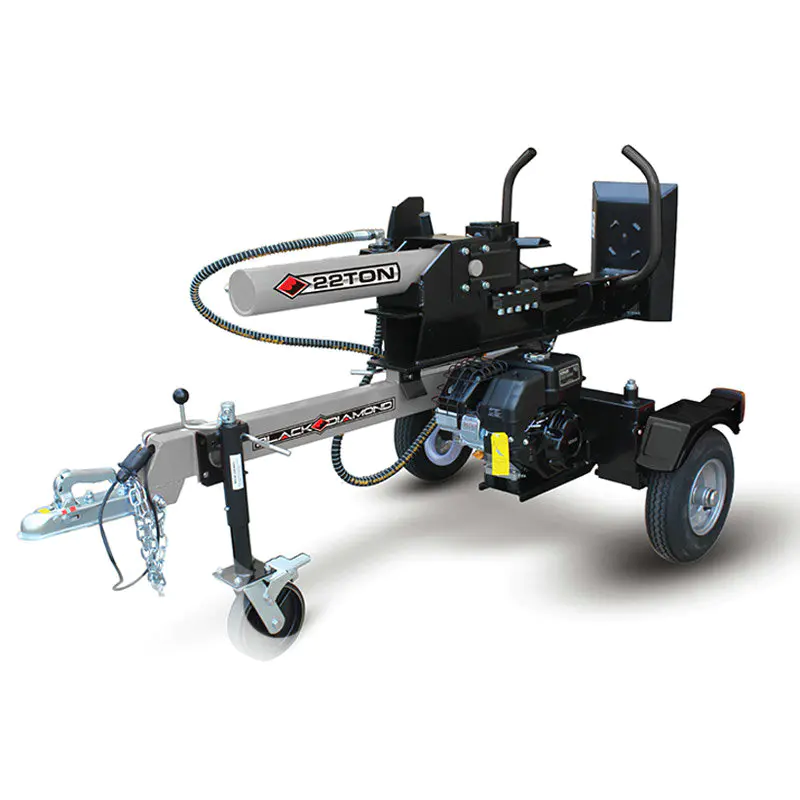
DESCRIPTION Accommodates splitting in horizontal only Half beam design...
See Details -
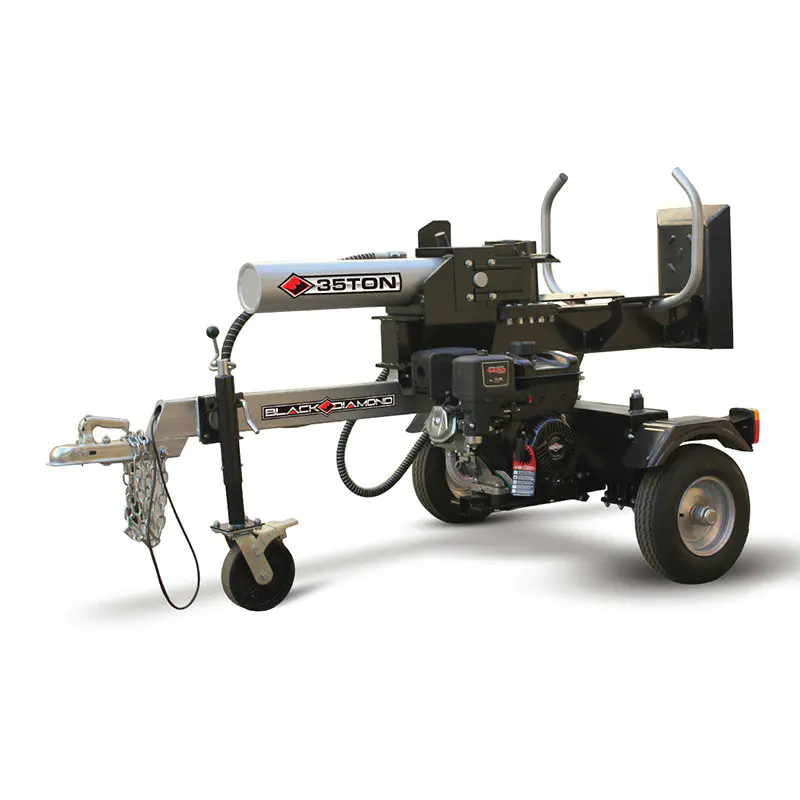
DESCRIPTION Vertical or horizontal operating position lets you work mo...
See Details -
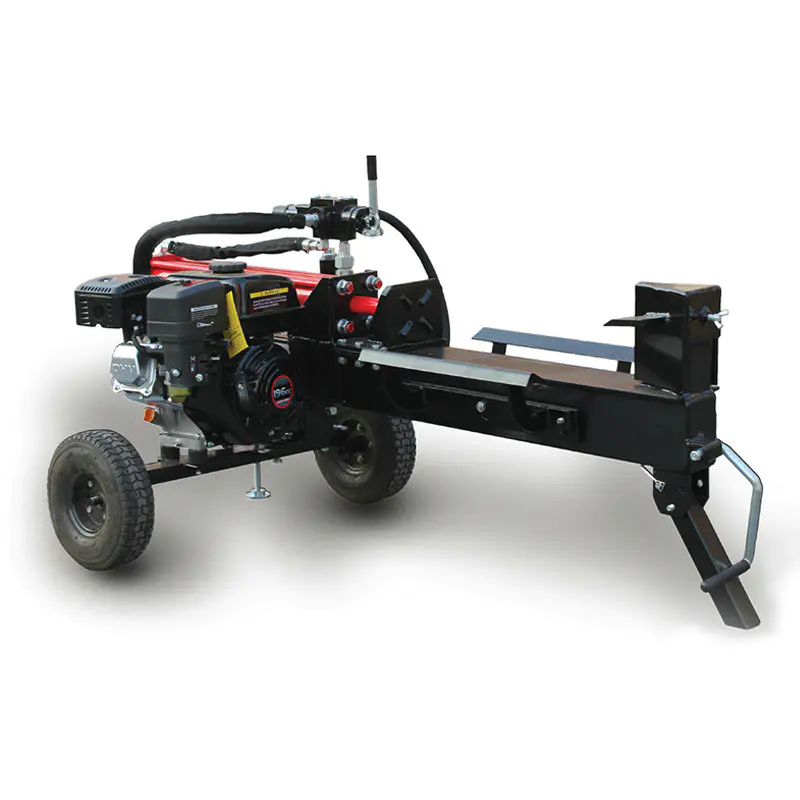
DESCRIPTION Working at horizontal position onlyAuto return hydraulic c...
See Details -
DESCRIPTION 22 Ton vertical/horizontal operating position allows forus...
See Details -
DESCRIPTION Accommodates splitting in horizontal only Half beam design...
See Details
