Lawn Sweeper vs. Leaf Blower: Which is more efficient for large yards?
Understanding the Lawn Sweeper vs Leaf Blower Debate
When managing large yards, property owners face a critical decision: invest in a lawn sweeper or rely on a traditional leaf blower. Both tools serve the essential purpose of clearing leaves and debris, yet they operate through fundamentally different mechanisms. The choice between them depends on yard size, terrain complexity, debris type, and personal efficiency preferences.
This comprehensive guide examines the operational differences, efficiency metrics, and practical applications of both tools to help you make an informed decision for your specific landscaping needs.
How Lawn Sweepers Work: Mechanism and Operation
Basic Operating Principle
A lawn sweeper functions through a rotating brush mechanism that collects debris into an integrated hopper. Unlike blowers that scatter materials, sweepers gather and contain debris systematically. The operator walks behind or sits on a riding model, moving at a controlled pace while brushes rotate beneath the deck.
Brush System Design
Modern sweepers utilize stiff bristle brushes positioned at specific angles to capture leaves, grass clippings, and small twigs. As the brushes rotate against the ground, they sweep debris toward a central chute that directs materials into an elevated hopper. This containment system prevents debris from escaping laterally, ensuring comprehensive coverage of targeted areas.
Collection Efficiency
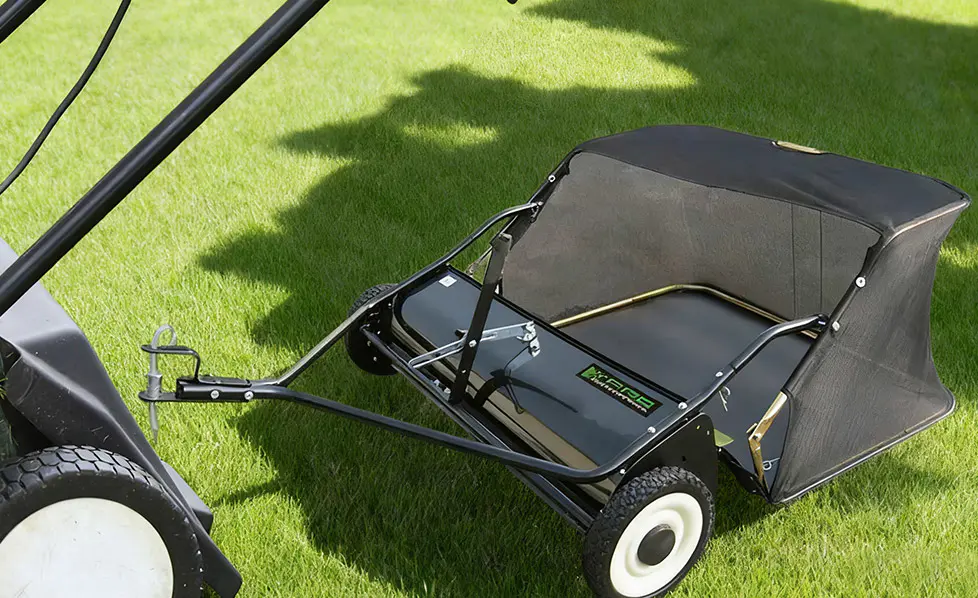
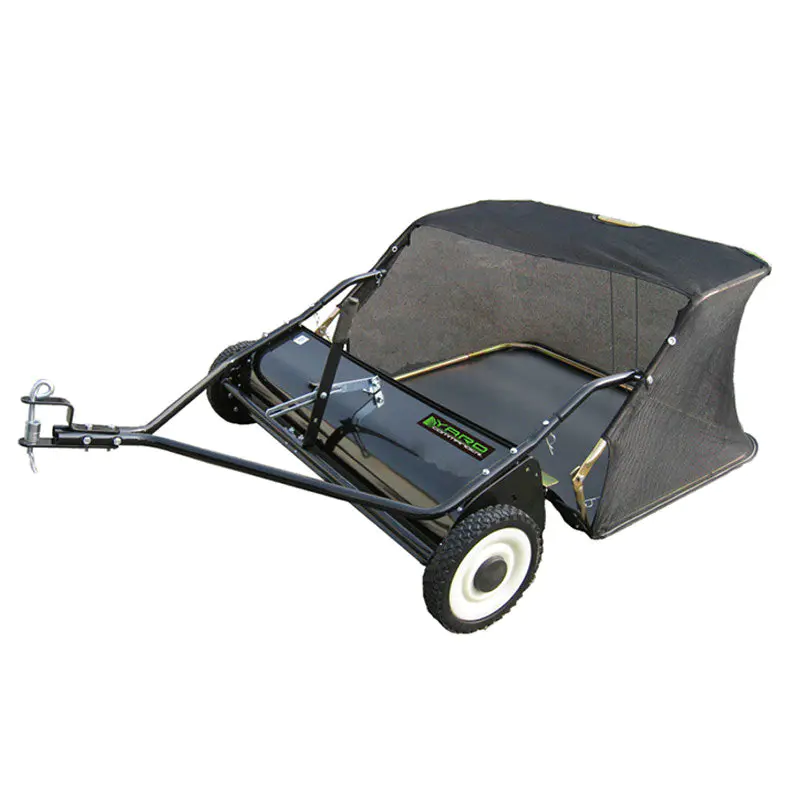
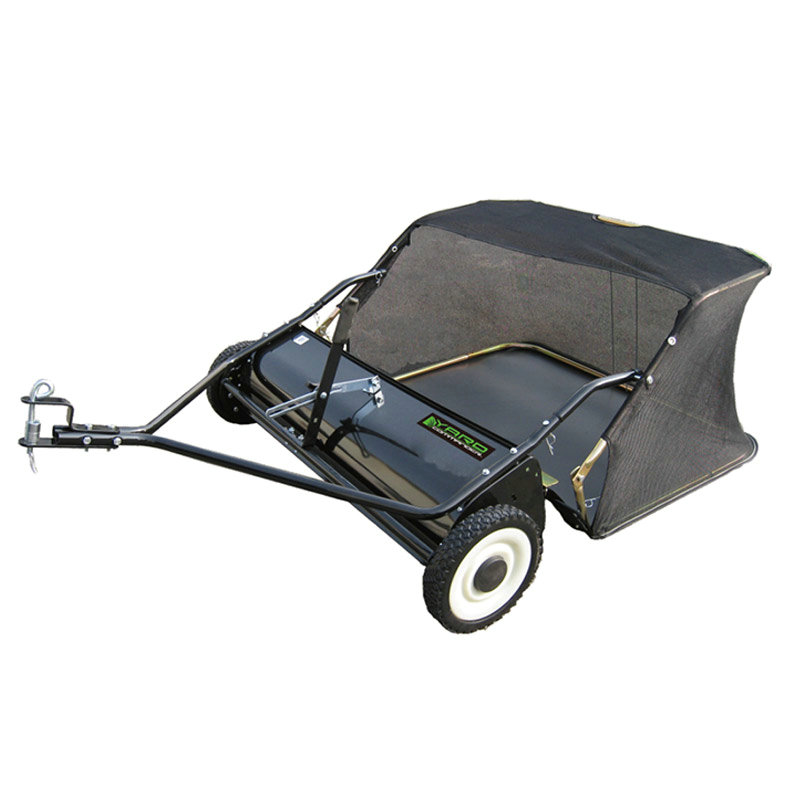
The primary advantage of the brush collection system is its ability to handle varying debris sizes. A quality tow behind lawn sweeper can capture materials ranging from fine leaves to acorns and pinecones. The mechanical action ensures that even partially buried debris gets dislodged and collected rather than blown around the yard.
Leaf Blower Technology: Power and Velocity
Air Movement Mechanics
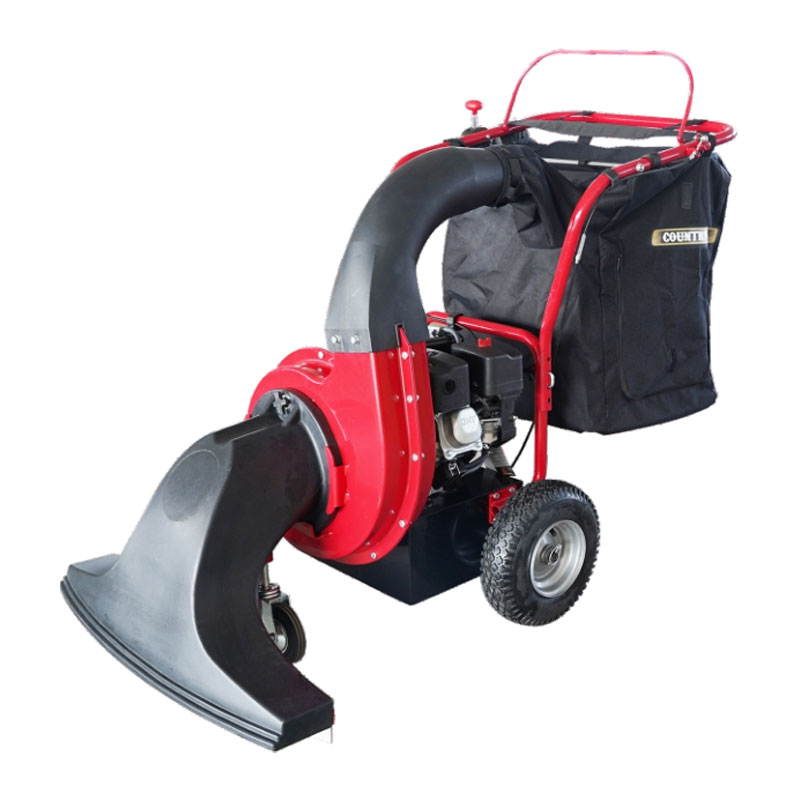
Leaf blowers operate on a fundamentally different principle, using high-velocity air streams to move debris. The motor drives a fan that accelerates air through a chute, creating directional force that propels leaves and debris across the yard. This approach requires no collection mechanism, making blowers lightweight and maneuverable.
Speed and Force Dynamics
Modern leaf blowers generate air velocities ranging from 100 to 280 miles per hour, depending on model classification. Handheld units typically operate at lower speeds, while commercial-grade blowers deliver substantially higher velocities. This force advantage allows rapid clearing of large open areas and the ability to move debris from hard-to-reach locations.
Limitations in Large Yard Scenarios
While velocity seems advantageous, large yard applications reveal critical inefficiencies. Blowers simply redirect debris rather than remove it from the property entirely. In expansive yards, leaves often scatter into multiple zones, requiring multiple passes and extended effort. Furthermore, debris may disperse onto neighboring properties, creating potential conflicts.
Efficiency Comparison: Key Performance Metrics
Coverage Rate and Time Investment
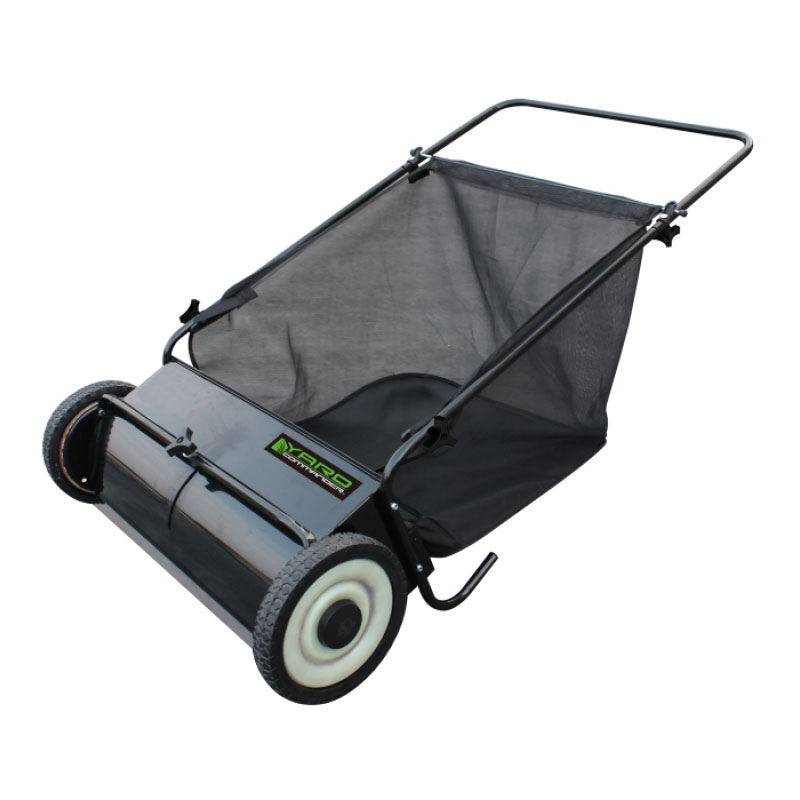
A push lawn sweeper with a 42-inch deck covers more ground per pass than manual labor or hand-blown debris. Studies indicate that sweepers process approximately 0.5 acres per hour under typical conditions, whereas leaf blowers require multiple directional passes and repositioning. For a 1-acre property, sweepers complete the task in 2-3 hours, while blowers often exceed 4-5 hours of active working time.
Performance Factor
Lawn Sweeper
Leaf Blower
Coverage Area/Hour
0.4-0.6 acres
0.2-0.4 acres
Required Passes
1-2
3-5
Debris Containment
Complete
Scattered
Physical Demand
Moderate
High
Noise Level (dB)
70-75
75-90
Energy Consumption and Cost Efficiency
Push lawn sweepers require only human-powered locomotion, consuming zero fuel beyond the initial purchase energy cost. Electric sweepers operate with battery systems, using approximately 1-2 kilowatt-hours per acre. Gasoline-powered blowers consume 0.5-1 gallon of fuel per hour of operation, adding recurring fuel expenses. For a large yard requiring quarterly seasonal maintenance, sweepers prove significantly more economical over 5-10 year lifecycles.
Debris Management and Environmental Impact
Sweepers collect debris into hoppers, enabling proper disposal or composting. This containment prevents debris from entering storm drains, reduces particulate air pollution, and minimizes environmental dispersal. Blowers scatter fine particles, creating dust clouds that settle on vehicles, windows, and landscaping. The uncontrolled dispersion also relocates debris to unintended locations, potentially damaging nearby vegetation or creating hazards.
Sweeper Types and Their Applications
Push Lawn Sweepers
Manual push models require operator locomotion without motorized assistance. These units excel in moderate-sized yards (0.25-0.5 acres) and deliver excellent precision control. Push sweepers operate silently, require no fuel, and provide light exercise benefit. However, they demand more physical effort and work slowly in heavy debris conditions. The traditional push design remains ideal for environmentally conscious owners and properties where noise restrictions apply.
High Speed Lawn Sweepers
Motorized sweepers with gasoline or electric engines significantly accelerate collection rates. High speed lawn sweepers operate at 5-10 miles per hour, doubling or tripling coverage capacity compared to push models. These machines feature power-driven brush systems that aggressively dislodge embedded debris. For properties exceeding one acre, high-speed models deliver dramatic time savings and reduced operator fatigue.
Tow Behind Lawn Sweepers
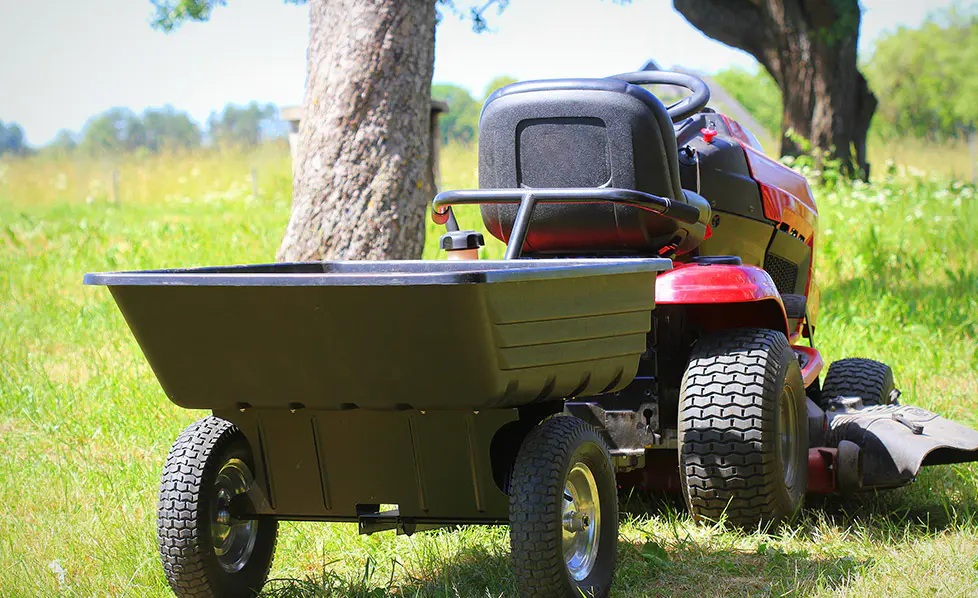
The tow behind lawn sweeper configuration attaches to riding mowers, transforming existing equipment into collection systems. This approach provides maximum efficiency for owners with established riding mower infrastructure. Tow-behind models process terrain at mower speeds while collecting debris mechanically, achieving superior results compared to either tool operating independently.
Heavy Duty Leaf Sweepers
Commercial-grade and heavy duty leaf sweeper models feature reinforced construction, larger hoppers (capacity to 25+ bushels), and aggressive brush systems. These professional-grade tools handle demanding applications including properties exceeding 2 acres, terrain with dense debris concentration, and continuous seasonal operations. Heavy-duty models typically feature self-propelled engines, hydrostatic transmission, and commercial-durability components.
Large Yard Efficiency Analysis
Defining Large Yard Scenarios
Properties exceeding 1 acre present substantial debris management challenges. Typical large yards encompass 1-5 acres with multiple tree species generating varying debris profiles. Fall seasons produce peak debris volumes, sometimes requiring multiple clearing cycles. Large properties often feature complex terrain including slopes, wooded areas, and landscaped zones requiring adaptive strategies.
Time Investment Comparison
For a 2-acre property with moderate debris:
Leaf blower operation: 6-8 hours of active blowing
Push sweeper operation: 4-5 hours of walking passes
High-speed motorized sweeper: 2-3 hours of driving passes
Tow-behind sweeper with riding mower: 1.5-2 hours of operation
Physical Demand Assessment
Leaf blower operation requires sustained arm and upper body engagement, causing fatigue in extended sessions. Sweeper operation distributes effort across locomotion, reducing point-load strain. For operators over 50 years old or with physical limitations, sweeper-based approaches prove significantly more sustainable across full seasonal workloads.
Weather Considerations
Wet or damp conditions dramatically affect tool performance. Leaf blowers lose effectiveness in humid conditions where leaves adhere together. Wet debris clogs blower intake systems, reducing air velocity. Sweepers perform acceptably in damp conditions, though brush saturation requires occasional cleaning. In post-rain scenarios or early morning operations, sweepers demonstrate superior reliability.
The 42-Inch Sweeper: Optimal Deck Width Analysis
Ideal Width for Large Properties
A 42 inch lawn sweeper represents an optimal balance between maneuverability and coverage. This width exceeds most walking paths and residential gate dimensions while remaining maneuverable in urban landscapes. The 42-inch deck achieves approximately 0.6 acres per hour under standard conditions, substantially outpacing handheld blowers across equivalent terrain.
Width vs. Weight Relationship
Larger deck widths increase hopper capacity and debris collection per pass. However, they also increase overall machine weight, creating traction challenges on slopes and demanding greater operator strength. The 42-inch configuration optimizes capacity without exceeding practical weight limits for self-propelled operation. Models exceeding 48 inches begin requiring commercial-grade engines and hydrostatic transmission systems, significantly increasing acquisition costs.
Maneuverability in Complex Terrain
Properties with narrow passages, ornamental plantings, and defined landscape beds require tool maneuverability. A 42-inch deck fits through standard 4-foot gates and negotiates curved pathways effectively. Wider commercial models struggle in residential settings, necessitating multiple repositioning movements that negate width advantages. The 42-inch standard balances sweep width with residential-environment practicality.
Maintenance Requirements and Long-Term Costs
Sweeper Maintenance Cycles
Push sweepers require minimal maintenance: annual brush inspection, bearing lubrication, and seasonal cleaning. Electric models need battery care and winter storage protocols. Motorized gasoline models require seasonal tune-ups, oil changes (annual or 50-hour intervals), spark plug replacement, and fuel stabilization. Overall annual maintenance expenses range from $50-200 for push models to $150-400 for motorized units.
Leaf Blower Maintenance Demands
Handheld and backpack blowers require seasonal carburetor cleaning, spark plug replacement, and air filter service. Fuel stabilization during off-seasons prevents internal varnishing. Despite simpler mechanical systems, operating at higher RPMs accelerates component wear. Annual maintenance costs typically range from $100-250. However, consumer-grade blowers have shorter serviceable lifespans (3-5 years) compared to quality sweepers (7-10 years).
Repair Cost Differential
Brush replacement on sweepers costs $30-80 per brush set, representing inexpensive wear items. Motor repairs and transmission issues escalate costs substantially. Leaf blower repairs often exceed tool replacement cost for older units. Comparing 10-year lifecycle expenses including maintenance, repairs, and eventual replacement, sweepers typically cost 30-40% less than blower-based strategies.
Component Longevity
Quality sweeper construction utilizes durable frame materials and sealed bearing systems designed for 7-10 year operational lifespans. Motorized sweepers with hydrostatic transmissions and commercial-duty engines often exceed 15 years with proper maintenance. Conversely, consumer-grade blowers often degrade significantly after 3-5 years of regular use.
Operational Strategy for Maximum Efficiency
Debris Collection Workflow
Optimal yard maintenance combines sweeping with strategic timing. Begin sweeping operations when debris is dry (mid-to-late morning after morning dew evaporates). Work in overlapping passes, proceeding perpendicular to wind direction to minimize blow-back. Empty hoppers into collection receptacles for disposal or composting. For properties with scattered trees, multiple passes at weekly intervals prevent debris accumulation better than single seasonal efforts.
Seasonal Timing Strategy
Peak efficiency occurs during moderate wind conditions (5-10 mph) when airborne debris settles quickly. Avoid high-wind days when debris travels far from source trees. Schedule sweeping operations after leaf-drop storms but before subsequent weather disperses materials. Spring operations capture winter-blown debris, while fall sessions address primary leaf-drop seasons.
Area Prioritization
Begin sweeping in open zones (lawns, driveways) before navigating complex areas (ornamental plantings, garden beds). This approach allows full hopper capacity utilization before time-consuming detail work. Perimeter sweeping (property boundaries, fence lines) captures debris before it disperses into landscaping.
Integration with Mowing Operations
Coordinate sweeping with grass cutting schedules. Post-mowing sweeping removes clippings and dislodged debris from cutting operations. Using tow-behind sweepers integrated with riding mowers combines operations efficiently, reducing time investment and equipment redundancy.
Environmental and Noise Considerations
Noise Pollution Impact
Leaf blowers generate 75-90 decibels of noise, approaching levels that create community disturbance and potential hearing hazard exposure. Sweepers operate at 70-75 decibels, noticeably quieter and more neighborhood-friendly. Many communities have implemented noise regulations restricting blower operation times, while sweeper operation faces fewer restrictions. For properties in residential zones, noise-conscious tool selection demonstrates community consideration.
Air Quality and Particulate Matter
Leaf blowers create dust clouds containing fine particles that travel significant distances. These particles aggravate respiratory conditions and can settle on surrounding properties. Sweepers capture debris, eliminating particulate clouds and containing environmental dispersal. The air quality advantage favors sweepers, especially in communities with air quality concerns or respiratory health considerations.
Fuel Consumption and Emissions
Gasoline-powered leaf blowers emit carbon dioxide and volatile organic compounds contributing to air pollution. Electric sweepers and push models eliminate operational emissions. Even accounting for electrical generation emissions, electric sweepers produce 60-70% fewer cumulative emissions than equivalent gasoline-powered operations over their serviceable lifespans.
Ecosystem Impact
Blown debris scatters seeds and organic materials, affecting landscaping design intentions. Debris dispersal can cover beneficial ground cover or damage delicate plants. Controlled collection through sweeping preserves landscape integrity and enables proper organic material management through composting systems.
Visual Efficiency Comparison Framework
This visualization demonstrates efficiency scoring across multiple performance dimensions. Sweeper-based solutions consistently outperform blower alternatives in large yard scenarios, particularly when measuring total time investment and debris containment effectiveness. The data indicates that motorized sweepers, particularly tow-behind and heavy-duty models, achieve significantly higher efficiency scores compared to all blower categories.
Decision Matrix for Property Owners
Property Size Considerations
Small properties under 0.25 acres benefit from versatile leaf blowers offering quick cleanup with minimal storage requirements. Properties from 0.25-1 acre show marginal advantages favoring quality push sweepers, which provide superior debris collection with lower long-term costs. Large properties exceeding 1 acre strongly favor motorized sweepers, where efficiency advantages compound across seasonal workloads. For properties over 3 acres, tow-behind sweepers integrated with existing riding mowers represent optimal efficiency.
Debris Profile Assessment
Properties with light leaf-drop (deciduous trees with efficient natural decomposition) may accommodate blower approaches. Heavy debris environments with multiple tree species, seed pods, acorns, and substantial organic accumulation strongly favor sweeper technology. Mixed debris types including twigs, pinecones, and composite materials require sweepers capable of handling varying sizes effectively.
Terrain and Landscape Complexity
Flat, open lawns with minimal obstruction favor both tool types, though sweepers remain more time-efficient. Sloped terrain, ornamental plantings, and complex landscape features demand sweepers' precision control and ability to navigate methodically without scattering materials. Steep slopes exceeding 20-degree angles challenge self-propelled sweepers; in these scenarios, push sweepers or professional services become more practical.
Budget Allocation Strategy
Initial sweeper investment ranges from $200-800 for quality push models to $1,500-4,000 for high-speed motorized units. Leaf blowers cost $100-600 for handheld models to $400-1,200 for commercial backpack units. While blowers offer lower acquisition costs, 5-10 year lifecycle expense analysis typically favors sweeper investment through reduced maintenance, longer serviceable lifespan, and elimination of seasonal fuel costs.
Climate and Regional Factors
Temperate climates with extended fall leaf-drop seasons benefit substantially from sweeper efficiency. Arid or desert regions with minimal natural debris generation may accommodate blower approaches. Regions with high humidity or frequent light precipitation favor sweepers' performance in damp conditions. Communities with strict noise ordinances eliminate blower viability in residential settings.
Hybrid Approach: Combining Tools Strategically
Complementary Tool Strategy
Optimal large property management often combines both tool types strategically. Use sweepers for primary bulk debris collection across open lawn areas. Reserve blowers for detail work in confined spaces, around ornamental plantings, and for clearing hard surfaces where debris accumulation occurs. This hybrid approach leverages each tool's strengths while minimizing individual tool limitations.
Seasonal Rotation Planning
Peak fall season demands rapid debris removal, favoring high-speed sweepers for efficiency. Spring cleanup, addressing winter wind-blown materials, benefits from combined sweeping and detail blowing. Summer maintenance between major debris events may utilize only blower approaches for light grass clipping management. Quarterly property assessments determine optimal seasonal tool selection.
Delegate vs. DIY Considerations
Property owners frequently balance personal time investment against professional service costs. For properties exceeding 2 acres or owners with limited time availability, professional maintenance services eliminate personal tool ownership overhead. However, for properties under 1.5 acres with owner commitment to regular maintenance, quality sweeper investment typically costs less annually than quarterly professional services.
Emerging Technologies and Future Trends
Electric Sweeper Advancement
Lithium battery technology increasingly powers modern sweepers, eliminating fuel infrastructure requirements while reducing noise and emissions. Battery-powered sweepers offer operational costs 60% lower than gasoline equivalents. Advancing battery chemistry extends runtime to 3-4 hours on single charges, adequate for most residential properties. Commercial applications increasingly adopt electric-powered collection equipment, validating long-term viability and component availability.
Autonomous and Semi-Autonomous Systems
Emerging robotic lawn maintenance systems include autonomous debris collection capabilities. While currently limited to small properties, development trajectories suggest expanded applications within 5-10 years. These systems eliminate human effort entirely, representing ultimate efficiency for property owners prioritizing convenience over capital investment.
Debris Mulching Integration
Advanced sweeper designs integrate mulching capabilities, processing collected debris into fine particles suitable for direct lawn incorporation. This innovation eliminates hopper emptying requirements while returning organic matter to soil. Mulching sweepers reduce disposal labor while improving soil health through organic matter management.
Smart Lawn Management Systems
Connected property management platforms increasingly integrate debris collection scheduling with weather forecasting and seasonal analysis. Mobile applications optimize collection routes and provide maintenance reminders. These systems represent next-generation efficiency enhancement, allowing data-driven decision making about tool utilization and maintenance timing.
Conclusion: Making Your Efficiency Choice
The lawn sweeper versus leaf blower decision requires honest assessment of property characteristics, personal physical capacity, environmental values, and financial considerations. For large yards exceeding one acre, evidence overwhelmingly supports sweeper-based approaches for superior efficiency, lower long-term costs, and environmental benefits.
Push sweepers provide economical solutions for modest properties and operators prioritizing quiet, emission-free operation. High-speed motorized sweepers dramatically accelerate collection across larger properties, reducing time investment substantially. Tow-behind configurations offer maximum efficiency for owners with existing riding mower infrastructure, transforming separate equipment into integrated collection systems.
While leaf blowers excel in rapid dispersal for small properties or detail work, their application in large yard scenarios proves inefficient when measuring total time investment, debris management success, and environmental impact. The most sophisticated property owners implement hybrid approaches, leveraging tool strengths strategically across seasonal variations and terrain diversity.
Ultimately, large yard efficiency demands systematic debris collection rather than dispersal. Quality sweepers represent this systematic approach, consistently outperforming blower alternatives across measurable performance dimensions.
Frequently Asked Questions
Q1: What is the ideal sweeper width for residential properties?
A 42-inch width represents the optimal residential balance, providing substantial coverage while maintaining maneuverability through standard gates and around landscaping. This width processes approximately 0.6 acres per hour, adequate for most residential properties up to 2 acres.
Q2: How often should I clean sweep brushes during operation?
Inspect brushes every 2-3 hours of operation. Light debris may simply blow off; wet or matted debris requires manual cleaning to restore brush contact with ground surface. Proper brush maintenance ensures consistent collection efficiency throughout seasonal operations.
Q3: Can sweepers handle wet leaves effectively?
Yes, sweepers perform adequately in damp conditions where leaf blowers lose effectiveness. Wet leaves clump together in blower systems, reducing air velocity. Sweeper brushes dislodge and collect wet debris efficiently, though hopper cleaning becomes more frequent with moisture-saturated materials.
Q4: What is the noise difference between push and motorized sweepers?
Push sweepers operate nearly silently, while motorized units generate 70-75 decibels. Gasoline-powered sweepers produce more noise than electric-powered equivalents. All sweeper configurations prove quieter than leaf blowers, which typically operate at 80-90 decibels.
Q5: How does terrain slope affect sweeper performance?
Push sweepers perform adequately on slopes up to 15 degrees. Motorized sweepers with traction systems handle steeper terrain effectively up to 20 degrees. Slopes exceeding 25 degrees challenge all sweeper types; in extremely steep properties, multiple passes or alternative approaches become necessary.
Q6: What hopper capacity is adequate for 1-2 acre properties?
A 12-15 bushel hopper capacity suits properties up to 1.5 acres, requiring 2-3 emptying cycles during typical fall cleanup. Properties exceeding 2 acres benefit from 20+ bushel capacity, reducing interruptions for hopper clearing. Larger capacity translates to fewer operational disruptions and improved efficiency.
Q7: How do I choose between push and motorized sweepers?
Choose push sweepers for properties under 0.5 acres, situations requiring silent operation, or for operators prioritizing exercise benefits and minimal maintenance. Select motorized sweepers for properties exceeding 0.75 acres, where time efficiency and reduced physical effort justify higher acquisition and maintenance costs.
Q8: Can tow-behind sweepers work with all riding mower models?
Most quality tow-behind sweepers accommodate standard riding mowers with universal hitching systems. However, verify compatibility with your specific mower model before purchase. Newer mower designs offer integrated hitch systems specifically engineered for sweeper attachment.
Q9: What is the typical lifespan of a quality sweeper?
Push sweepers maintain functionality 7-10 years with basic maintenance. Motorized models with proper care often exceed 12-15 years operational lifespan. Longevity depends substantially on maintenance consistency and operating conditions. Commercial-grade units in proper maintenance programs often function 15+ years.
Q10: Are there environmental certifications for sweeper selection?
Electric-powered sweepers carry reduced-emission certifications. Look for Tier 4 Final emissions compliance on gasoline models, indicating advanced pollution control systems. Battery-powered and push models eliminate operational emissions entirely, representing the most environmentally conscious selection.

 LANGUAGE
 English
 Deutsch
 Español
 Français
 русский