Yes, Lawn Sweepers Work — Here's What the Evidence Shows
Lawn sweepers are genuinely effective at collecting leaves, especially on flat to moderately sloped lawns with short, dry grass. In controlled use, a quality push lawn sweeper can clear leaves 3 to 5 times faster than hand raking, covering up to 2,000–3,000 square feet in under 20 minutes. They work by using rotating brushes to sweep debris into a rear hopper bag, which typically holds 20 to 30 gallons of material.
That said, results vary based on leaf type, moisture level, grass height, and terrain. Understanding these variables is the key to getting consistent performance from a lawn leaf sweeper.
How Lawn Sweepers Work Mechanically
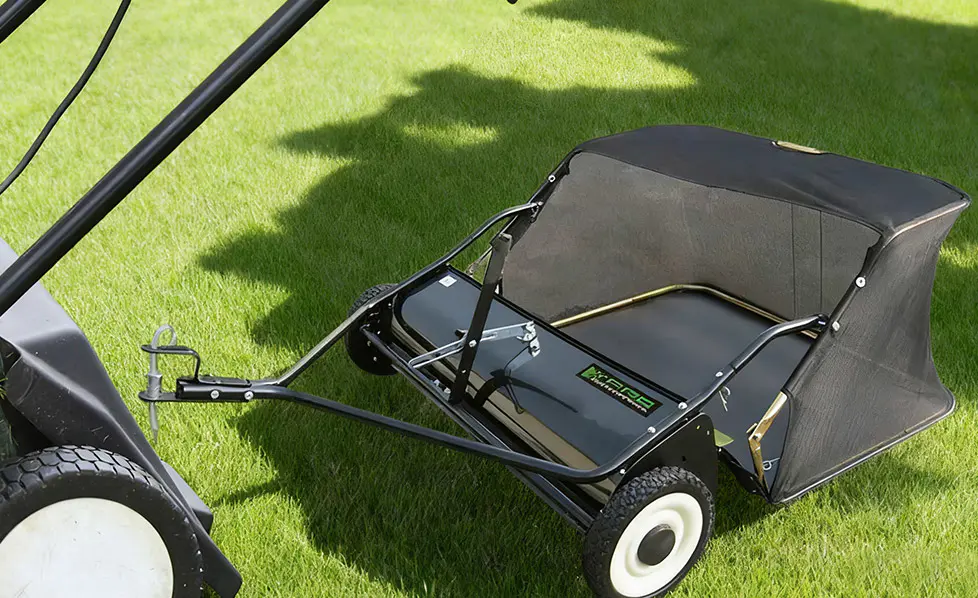
Most residential lawn sweepers are unpowered push models. As you push the unit forward, the rear wheels drive a brush axle through a belt or gear system. The spinning brushes — typically made of polypropylene bristles — lift and fling leaves and debris backward into a collection bag.
- Brush height adjustment: Critical for performance. Set too high, the brushes miss debris. Set too low, they scalp the lawn or drag heavily.
- Hopper capacity: Ranges from 7 to 26 bushels depending on the model. Larger hoppers mean fewer trips to empty.
- Brush rows: Entry-level models use 1–2 rows; heavy-duty models use 3–5 rows, improving pickup efficiency on dense leaf layers.
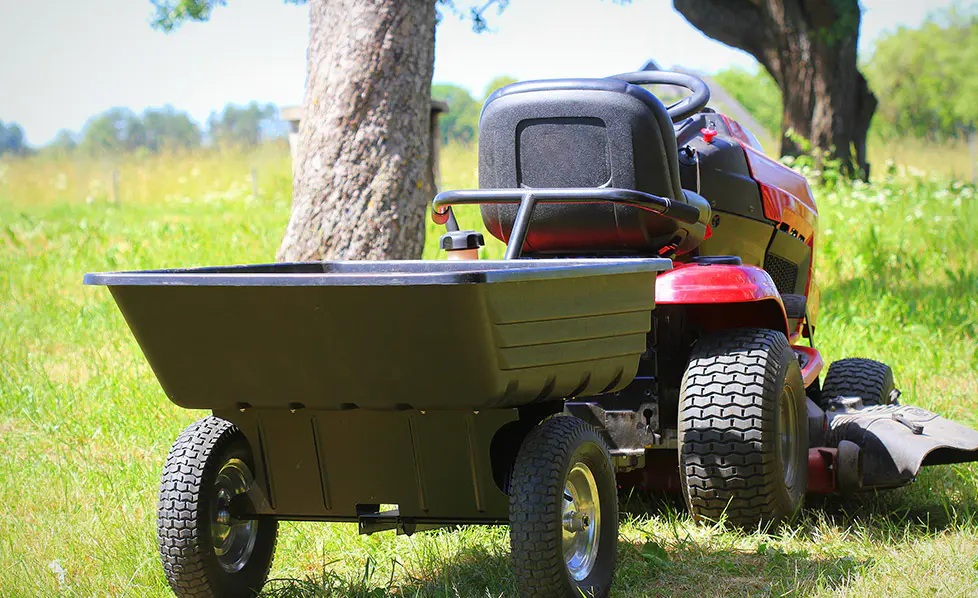
- Tow-behind vs. push: Tow-behind sweepers attach to riding mowers and are suited for larger properties over 1 acre.
What Conditions Affect Performance
Leaf Moisture
Dry leaves sweep best. Wet or matted leaves clump together and can clog the brush mechanism or resist pickup entirely. For best results, sweep after 2–3 dry days following rainfall. Wet leaf performance drops by an estimated 40–60% compared to dry conditions.
Grass Height
Grass taller than 3 inches can interfere with brush contact and reduce effectiveness. Mow your lawn before sweeping if the grass has grown long. Short, even turf allows the brushes to contact the surface cleanly and consistently.
Leaf Depth and Type
Light, dry leaves like maple or birch sweep very well. Heavy, leathery leaves such as magnolia or oak may require multiple passes. Leaf layers deeper than 3–4 inches may need to be broken up with a rake first before the sweeper can collect them efficiently.
Terrain
Push sweepers perform best on flat to gently sloped terrain. Steep slopes, bumpy ground, or uneven surfaces reduce brush contact and may cause uneven collection. For highly uneven lawns, a vacuum-based leaf blower may work better in combination with a sweeper.
Lawn Sweeper vs. Raking vs. Leaf Blower: A Comparison
| Method |
Speed |
Physical Effort |
Leaf Collection |
Best For |
| Lawn Sweeper |
Fast |
Low |
Direct into bag |
Medium to large lawns |
| Hand Raking |
Slow |
High |
Piled, then bagged |
Small areas, tight spots |
| Leaf Blower |
Fast |
Medium |
Piled, requires bagging |
Clearing paths, corners |
| Riding Mower Mulcher |
Very fast |
Very low |
Mulched into lawn |
Large open lawns |
The lawn sweeper stands out for combining speed with direct collection — no piling and re-bagging step is needed. For homeowners with medium-sized lawns (5,000–20,000 sq ft), this is often the most time-efficient option.
What Lawn Sweepers Can and Cannot Pick Up
Works Well For:
- Dry fallen leaves (any tree type)
- Pine needles and small twigs (under ½ inch diameter)
- Grass clippings from mowing
- Light thatch buildup on turf surface
- Small seed pods and acorns (with appropriate brush setting)
Less Effective For:
- Wet, matted, or decomposing leaves
- Large sticks or branches over ½ inch
- Heavily thatched or overgrown grass
- Leaves trapped in mulch beds or garden borders
- Debris on gravel or loose stone surfaces
Tips to Maximize Your Lawn Sweeper's Effectiveness
- Adjust brush height before every session. The brushes should just graze the grass tips — you should hear a light swooshing sound as you push.
- Sweep in overlapping rows. Like mowing, overlapping your passes by 3–4 inches ensures no strips are missed.
- Go slower in heavy leaf areas. Moving too fast reduces brush contact time and leaves behind more debris.
- Empty the hopper frequently. An overfull bag reduces suction and causes leaves to spill back out.
- Sweep before rain, not after. Plan your sweeping sessions around dry weather windows for best results.
- Run a pre-sweep with a blower. Use a leaf blower to push leaves out from garden edges and corners onto the open lawn where the sweeper can reach them.
When a Lawn Sweeper Is Worth the Investment
A push lawn sweeper typically costs between $60 and $200, while tow-behind models range from $150 to $500. For homeowners who spend multiple hours raking leaves each fall, the time savings typically justify the cost within one or two seasons.
A lawn sweeper makes the most sense if you have:
- A lawn of 2,000 sq ft or more with significant tree coverage
- Mostly flat or gently sloped terrain
- A recurring need to also collect grass clippings throughout the growing season
- Physical limitations that make extended raking difficult
If your yard is small (under 1,000 sq ft) or heavily landscaped with beds and obstacles, a rake or handheld blower may still be more practical for your specific layout.
Frequently Asked Questions
Q1: Do lawn sweepers work on wet leaves?
Not well. Wet leaves clump and resist the rotating brushes, significantly reducing pickup efficiency. Wait for dry conditions — ideally 2–3 days after rainfall — before sweeping.
Q2: How many passes does a lawn sweeper need to clear leaves?
In moderate leaf coverage, one pass is usually sufficient. In heavy fall leaf drops, two passes (the second at a 90° angle to the first) gives noticeably cleaner results.
Q3: Can a lawn sweeper replace raking entirely?
For open lawn areas, yes. However, raking is still needed for edges, flower beds, corners, and areas near fences or walls where the sweeper cannot reach.
Q4: How often should I clean or maintain my lawn sweeper?
After each use, remove debris tangled in the brushes and check for bent bristles. Lubricate the axle bearings at the start of each season. Replace worn brushes when bristles are compressed or uneven.
Q5: Is a tow-behind lawn sweeper better than a push model?
For lawns over 1 acre, yes — tow-behind models cover ground much faster. For smaller lawns, a push sweeper is usually sufficient and more maneuverable in tighter spaces.
Q6: Can lawn sweepers pick up acorns?
Many models can collect small acorns and seed pods when the brush height is set low enough. Very large acorns may need to be mulched or blown into piles first.

 LANGUAGE
 English
 Deutsch
 Español
 Français
 русский