Introduction to Wood Splitters and Their Importance
The task of splitting firewood has been a fundamental part of homesteading, property maintenance, and rural living for generations. What was once accomplished exclusively through manual labor with axes and mauls has evolved significantly with technological advancement. Today, property owners, landscapers, and forestry professionals have access to a diverse array of equipment designed to make this demanding work safer, faster, and more efficient. Understanding the landscape of available options is essential for anyone who regularly processes wood for heating, land clearing, or commercial purposes.
Wood splitting has transformed from a purely physical endeavor into a task that can be accomplished through various mechanical and hydraulic systems. The modern wood splitter represents a convergence of practical engineering and labor-saving innovation, allowing individuals to process significantly larger quantities of wood in a fraction of the time it would take using traditional methods. For those dealing with seasonal firewood preparation, property maintenance following storms, or commercial timber processing, selecting the appropriate equipment can dramatically impact productivity, safety, and overall project success.
The decision to invest in a wood splitter involves understanding not only the fundamental differences between various types but also recognizing how specific features align with your particular situation. Whether you're processing a cord of firewood annually or managing substantial timber on a larger property, the variety of available options ensures that there is an appropriate solution. This comprehensive guide explores the full spectrum of wood splitting equipment, examining the mechanical principles that make them work, the features that distinguish different models, and the practical considerations that should guide your purchasing decisions.
Understanding the Fundamental Types of Wood Splitters
The equipment available for splitting logs falls into several distinct categories, each operating on different mechanical principles and suited to different applications. Understanding these fundamental differences provides the foundation for all other decision-making regarding wood splitting equipment.
Manual Wood Splitters and Traditional Approaches
Manual wood splitting equipment represents the most basic category of available tools and encompasses both non-mechanical devices and hand-operated machines. The traditional axe or maul remains a viable option for small-scale work, requiring no fuel, maintenance, or storage space beyond basic tool care. However, manual approaches demand significant physical exertion and present considerable safety challenges when working with large volumes of wood.
Beyond the traditional axe, mechanical manual splitters have been developed that use leverage and wedge principles to amplify human force. These devices typically employ a hand-operated lever system that concentrates applied pressure into a splitting wedge. Manual log splitters can be effective for homeowners processing small quantities of wood occasionally, though they require substantial physical effort and are significantly slower than powered alternatives. The advantage of these devices lies in their simplicity, low cost, and complete independence from external power sources.
Hydraulic Wood Splitters
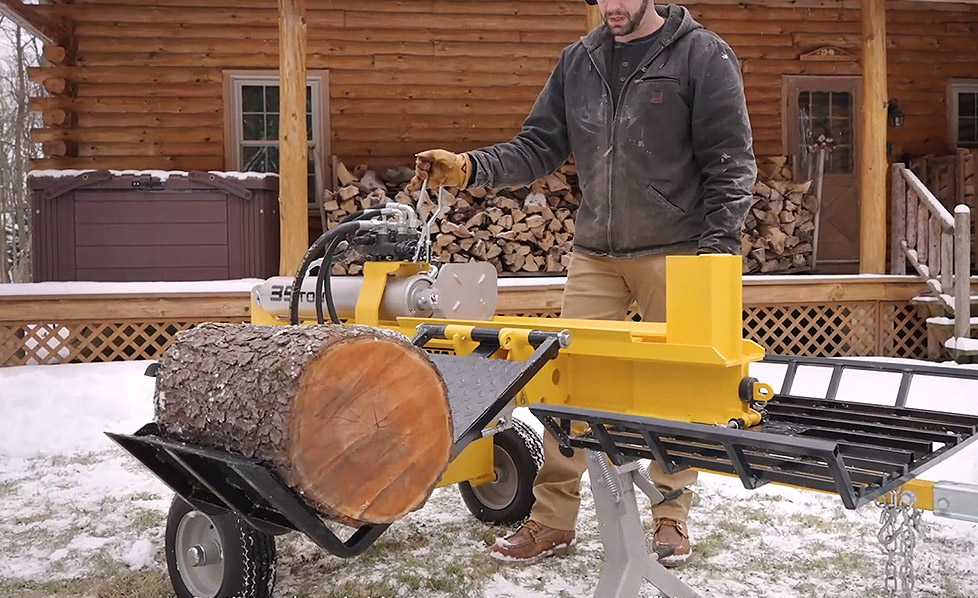
Hydraulic wood splitters represent the most commonly encountered equipment type in both commercial and residential settings. These machines operate using fluid pressure systems that drive a wedge or splitting mechanism through logs with tremendous force. The hydraulic principle allows for controlled, consistent splitting action that is far more efficient than manual methods while remaining manageable for operators.
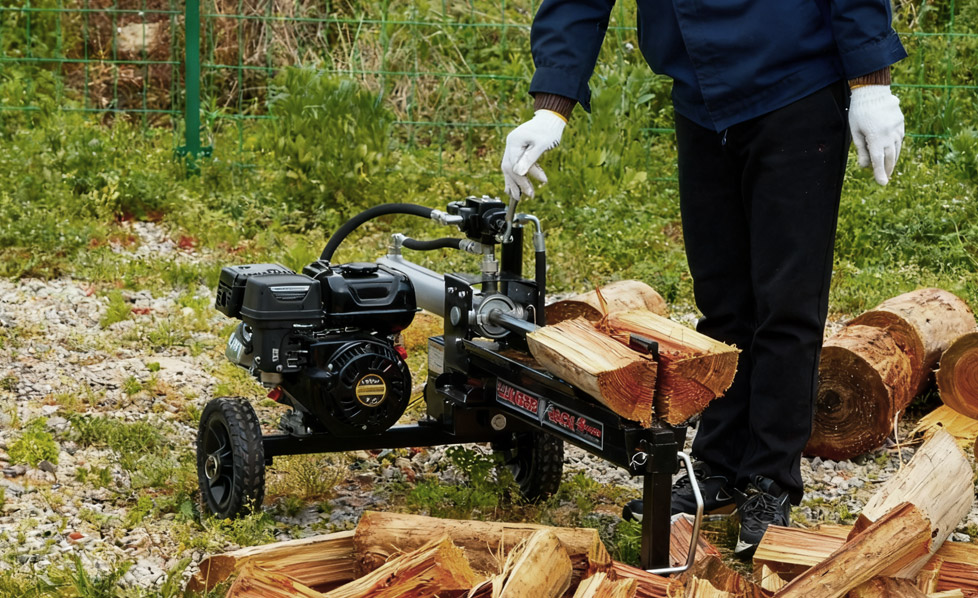
Hydraulic splitters typically feature an engine—either gasoline or diesel—that powers a pump that generates hydraulic pressure. This pressure is directed through a control valve and hydraulic cylinder, which moves the splitting wedge forward and backward. The advantage of hydraulic systems includes predictable splitting forces, adjustable pressure settings, and relatively fast cycle times. These machines are available in configurations ranging from small portable units suitable for homeowner use to large industrial-capacity models designed for commercial timber processing.
The range of hydraulic splitter capacities is substantial. Entry-level models may provide splitting forces around 4 to 5 tons, while high-capacity commercial units can generate forces exceeding 30 tons or more. This variation in power directly correlates with the size and density of wood that can be processed effectively, as well as the volume of work that can be completed in a given time period.
Electric and Smaller-Scale Powered Options
Electric wood splitters occupy a middle ground between fully manual equipment and large hydraulic systems. These devices use electric motors to power hydraulic pumps or direct mechanical splitting mechanisms. Electric models offer several advantages including lower operating costs, reduced noise levels compared to gasoline-powered equipment, and minimal maintenance requirements. However, they are generally limited by cord length or battery capacity, making them less suitable for large-scale operations or remote work locations.
Electric splitters work well for homeowners with convenient access to electrical power and moderate volumes of wood to process. The trade-off involves accepting lower splitting force capabilities and longer processing times compared to larger hydraulic systems, though these limitations often align well with residential needs.
Key Features and Technical Specifications to Evaluate
When examining potential wood splitting equipment, several technical features significantly impact functionality, safety, and suitability for specific applications. Understanding these specifications allows informed comparison across available options.
Splitting Force and Tonnage Capacity
The splitting force, measured in tons, represents the amount of pressure the machine can generate at the splitting wedge. This specification directly determines what size and density of logs can be processed effectively. A machine rated at 10 tons can split most common firewood sizes efficiently, while larger commercial equipment may provide 20, 30, or more tons of splitting force for processing dense hardwoods or larger diameter logs.
Adequate splitting force prevents the frustrating situation where a machine struggles with logs or fails to complete splits, which impacts both productivity and operator safety. Under-powered equipment for the intended application creates pressure to force splits that should happen naturally, potentially causing equipment damage or operator injury.
Log Length and Diameter Capacity
The physical dimensions of logs that a splitter can accommodate vary significantly between models. Log length capacity typically ranges from 12 to 24 inches, though some specialty equipment can handle longer sections. Diameter capacity, measured at the widest part of the log to be split, ranges from around 6 inches for small models to 12 inches or more for larger units.
Matching these specifications to the actual logs available on your property is essential. Processing logs that exceed a machine's physical capacity requires pre-cutting them into smaller sections before splitting, which adds significant labor. Conversely, equipment sized for larger logs than you typically encounter represents unnecessary expense and complexity.
Splitting Cycle Time and Productivity
Cycle time—the duration required to complete one full split from initial contact with the log through return to ready position—directly impacts how much work can be accomplished in a given timeframe. Premium equipment typically completes splits in 15 to 25 seconds, while smaller or lower-power models may require 30 seconds or more per cycle. Over the course of processing cords of wood, these differences accumulate into substantial variations in total completion time.
Operational Direction: Horizontal and Vertical Configurations
Wood splitters are available in both horizontal and vertical configurations, each offering distinct advantages and limitations. Horizontal models feature a log positioned parallel to the ground as the splitting wedge approaches. Vertical models position logs upright with the splitting action occurring from above.
Horizontal configurations reduce operator strain from lifting and maneuvering logs, making them preferable for extended work sessions or when processing large volumes. Vertical models require less floor space and can be positioned in confined areas, making them suitable for storage-limited situations. The choice between configurations depends heavily on available workspace, intended log size, and operator physical capability.
Power Source Considerations
Wood splitters operate using various power sources, each presenting distinct operational characteristics:
- Gasoline engines offer the most flexibility in location and operation, requiring only fuel access and basic maintenance
- Diesel engines provide extended runtime between refueling and operate effectively in temperature variations
- Electric motors eliminate fuel storage and significantly reduce maintenance while limiting to nearby power sources
- Battery-powered options offer portability and quiet operation but typically deliver lower power output
Portable Versus Stationary Equipment
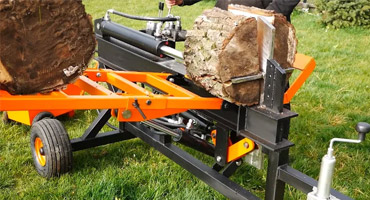
Portability affects where and how equipment can be deployed. Smaller models on trailers or with wheels can be moved between job sites or storage locations. Larger equipment may be semi-permanently positioned in a work area. Portability considerations should align with how frequently you relocate work activities and the distances involved in transport.
Homemade and Custom Wood Splitter Solutions
Many individuals with mechanical aptitude and fabrication skills have developed custom wood splitting solutions tailored to their specific circumstances. Understanding the considerations involved in such projects provides insight into the principles underlying commercial equipment.
Design Principles for Custom Splitters
Homemade splitter designs typically incorporate basic principles: an engine providing power, a hydraulic pump generating pressure, a control valve directing flow, and a cylinder creating the splitting stroke. Some designs use mechanical systems with belt drives or chain transfers rather than hydraulic mechanisms, though hydraulic systems generally provide more consistent and controllable splitting action.
The critical engineering consideration involves ensuring that the mechanical advantage of the system generates sufficient force at the splitting wedge relative to the physical effort required from the operator or the power availability from the engine. Inadequate force design results in equipment that performs poorly or unreliably on actual wood splitting tasks.
Safety Considerations in Custom Equipment
Homemade equipment must incorporate comprehensive safety features despite the absence of commercial safety standards. Essential considerations include:
- Guards preventing operator contact with moving mechanical elements
- Emergency stop mechanisms accessible to operators
- Stable construction preventing tipping or shifting during operation
- Adequate visibility of the splitting area during all operational phases
- Proper grounding for electrical systems and protection from moisture
Safety in custom equipment depends entirely on builder knowledge and commitment, making this approach suitable primarily for individuals with genuine mechanical expertise and understanding of equipment design principles.
Essential Components and Available Parts
Understanding the key components that constitute a wood splitter allows informed maintenance and comparison across available equipment. Various parts work together to achieve the splitting function, and replacing or upgrading these components can extend equipment life or enhance performance.
Hydraulic System Components
The hydraulic system forms the heart of most contemporary wood splitting equipment. This system comprises several essential elements working in coordinated function:
| Component |
Function |
Maintenance Considerations |
| Hydraulic Pump |
Generates pressure from engine power |
Regular fluid checks; replacement if performance degrades |
| Control Valve |
Directs pressurized fluid to cylinder |
Lubrication maintenance; functional testing |
| Hydraulic Cylinder |
Converts pressure to linear splitting motion |
Seal inspection; rod cleaning to prevent damage |
| Hydraulic Hoses |
Transmit pressurized fluid between components |
Regular inspection for leaks or damage; replacement as needed |
| Reservoir |
Stores and cools hydraulic fluid |
Fluid level checks; strainer cleaning; periodic fluid replacement |
Engine and Power Components
The engine provides the fundamental power driving the hydraulic system. Gasoline or diesel engines in wood splitters operate similarly to those in other equipment, requiring standard maintenance including oil changes, filter replacement, fuel system care, and seasonal storage preparation. Proper engine maintenance directly extends equipment life and ensures reliable operation when needed.
Mechanical Framework and Splitting Wedge
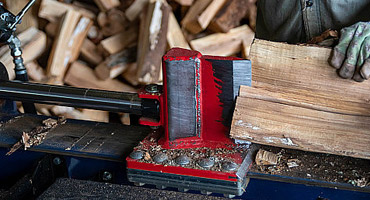
The structural frame must be robust enough to contain the forces generated during splitting without flexing or shifting. The splitting wedge itself experiences the most direct stress, requiring replacement if it becomes cracked, bent, or excessively worn. Quality wedges are hardened steel capable of withstanding the repeated impact and pressure of splitting action.
Log Positioning and Handling Components
Depending on the machine design, various components facilitate positioning logs for splitting. Log tables, tongs, adjustable holders, and positioning mechanisms all contribute to both safety and efficiency. Ensuring these components are functional and properly adjusted reduces operator strain and improves safety during operation.
Maintenance and Care for Long-Term Equipment Performance
Proper maintenance extends equipment life, ensures reliable operation, and maintains safety standards throughout years of service. Maintenance protocols differ based on equipment type but follow consistent principles.
Pre-Operational and Regular Inspection Procedures
Before each use, operators should visually inspect equipment for obvious damage, verify that all guards are in place, check that control handles move freely, and ensure no leaks are present. These brief inspection procedures prevent operating damaged equipment and catch developing problems before they result in equipment failure during work.
Seasonal Preparation and Storage
Equipment used seasonally requires preparation for storage during inactive periods. For gasoline-powered equipment, this includes fuel system stabilization or complete fuel draining to prevent deterioration. Oil should be checked and replaced if necessary. Equipment should be stored in a dry location protected from moisture and temperature extremes. Before returning equipment to service following storage, operators should verify that all systems function normally through test operation before beginning actual work.
Fluid Maintenance for Hydraulic Systems
Hydraulic fluid represents the lifeblood of hydraulic splitters. The fluid must be maintained at proper levels, kept clean to prevent contamination, and replaced periodically according to manufacturer recommendations. Contaminated or degraded hydraulic fluid results in reduced system performance and potential damage to hydraulic components. Maintaining hydraulic fluid in proper condition is among the most important factors in preventing costly equipment failures.
Component Replacement and Wear Parts
Various components experience wear through normal operation and require periodic replacement. Hydraulic seals and gaskets, engine spark plugs, air filters, fuel filters, and oil represent consumable maintenance items. Identifying when replacement becomes necessary prevents unexpected equipment failures during critical work periods. Maintaining a supply of common wear parts ensures equipment can be quickly returned to service without extended downtime.
Selecting the Appropriate Wood Splitter for Your Specific Situation
Choosing suitable equipment requires honest assessment of actual requirements rather than purchasing based on perceived capability or marketing appeal. Several factors guide this critical decision.
Volume and Frequency of Wood Processing
How much wood you actually process annually provides essential context for equipment selection. Processing a single cord of firewood annually requires a fundamentally different approach than managing multiple cords for a large property or commercial operation. Overestimating actual processing requirements often results in unnecessary equipment expense and complexity. Conversely, underestimating needs can mean equipment that struggles with actual workload demands.
Available Space and Storage Constraints
Physical space available for equipment storage significantly constrains options. Compact vertical models suit situations with limited storage, while horizontal systems requiring greater floor space need appropriate facilities. Portable equipment on trailers offers flexibility for those without dedicated workspace, while stationary installations serve permanent work locations.
Physical Capability and Operator Characteristics
The physical demands of equipment operation must align with operator capability. Horizontal models reduce lifting strain, beneficial for those with physical limitations. Smaller equipment with lower power requirements may be appropriate for operators of limited strength, while larger operations benefit from equipment that reduces per-log handling demands.
Available Budget and Long-Term Value Considerations
Equipment costs range from modest amounts for small manual or electric models to substantial investments for large commercial-capacity units. Evaluating value requires considering not just initial cost but ongoing maintenance expenses, fuel costs, and depreciation over expected equipment life. A moderately priced unit suitable for actual needs often provides better overall value than premium equipment exceeding requirements or budget equipment insufficient for the task.
Fuel Availability and Environmental Factors
If operating in areas where gasoline or diesel fuel availability is inconsistent or expensive, electric-powered options become more attractive. Climate considerations affect equipment protection and seasonal storage needs. Environmental factors including noise restrictions in residential areas might favor electric or quieter hydraulic models over gasoline-powered equipment.
Advanced Techniques for Efficient Wood Splitting Operations
Experienced operators develop techniques that maximize productivity and safety when using wood splitting equipment. Understanding these approaches improves results regardless of the specific equipment being used.
Log Preparation and Pre-Processing Strategies
Before logs reach the splitter, pre-processing decisions impact efficiency. Logs larger than the equipment's capacity require pre-cutting into appropriate sizes. Removing bark in certain conditions can improve splitting action and reduce wear on splitting wedges. Allowing freshly cut logs brief time to begin drying can sometimes improve splitting characteristics compared to green wood. Thoughtful log preparation reduces operational strain on equipment and accelerates overall processing.
Optimal Wedge Contact and Log Positioning
Ensuring the splitting wedge contacts logs at an appropriate angle and position maximizes splitting efficiency and minimizes logs that resist splitting. Logs should be positioned stably and consistently, reducing the frequency of problematic positioning that can damage equipment or consume excessive time. Understanding grain patterns and natural weak points in wood guides positioning for most efficient splitting.
Managing Difficult Logs and Stubborn Wood
Certain logs resist splitting despite adequate equipment power. Knots, grain patterns, and wood density create challenging conditions. Techniques including pausing the splitting action midway and retracting to allow tension relief, splitting from different angles, or pre-scoring certain logs improve success with difficult wood. Patience and technique modifications prove more effective than forcing equipment beyond its design intent.
Safety Practices During Extended Operations
Operating equipment over extended periods creates cumulative fatigue and increased injury risk. Regular breaks, maintaining consistent attention to operation, and avoiding distraction or rushing contribute to safer work. Ensuring proper personal protective equipment including eye protection is consistently used prevents minor accidents from becoming serious injuries. Safety protocols should remain consistent regardless of familiarity with equipment or complacency developed through repeated use.
Common Problems and Practical Troubleshooting Approaches
Equipment occasionally develops problems that impair function. Understanding common issues and practical solutions allows quick resolution in many situations.
Reduced Splitting Force or Slow Operation
Declining performance often indicates hydraulic fluid contamination, low fluid levels, pump wear, or engine problems affecting power output. Checking hydraulic fluid level and condition represents the first diagnostic step. If fluid is adequate and clean but performance remains poor, professional service may be required for pump or engine inspection.
Fluid Leaks and System Pressure Loss
Small leaks may be visible or apparent through fluid loss over time. Identifying leak location guides repair decisions. Hose connections may be tightened if loose, while damaged hoses require replacement. Seal leaks within cylinders or the pump necessitate professional repair involving component disassembly. Addressing small leaks promptly prevents them from developing into major problems causing equipment downtime.
Engine Starting Problems or Power Loss
Gasoline or diesel engines may fail to start due to fuel system issues, spark plug problems, or other mechanical troubles. Basic steps including fuel verification, spark plug inspection, and battery condition (for electric start models) address many common issues. If basic troubleshooting fails to restore operation, professional engine service becomes necessary.
Wedge Binding or Incomplete Splits
Logs occasionally split partially, leaving fibers connecting the pieces despite adequate splitting force. This usually indicates that the log's grain pattern creates tension opposing the split direction. Retracting and re-contacting the log from a different angle, or accepting partial splits that can be separated manually, represents the practical solution. This is not equipment failure but rather the natural resistance of certain wood characteristics.
Comparing Equipment Categories: Summary Analysis
Each category of wood splitting equipment offers distinct advantages and limitations suited to different situations and operator preferences.
| Equipment Type |
Typical Cost Range |
Suited For |
Primary Limitation |
| Manual Splitter |
Low |
Occasional small-volume use |
High physical demand; slow processing |
| Electric Splitter |
Moderate |
Residential property with power access |
Limited by cord length or battery; lower power |
| Small Hydraulic |
Moderate to High |
Regular residential firewood preparation |
Limited to smaller logs; longer cycle times |
| Large Hydraulic |
High |
Commercial operations; large properties |
Higher cost; requires ongoing maintenance |
The optimal choice aligns specific equipment characteristics with actual requirements rather than selecting based on advertised power or appeal. A well-matched machine that is adequate for intended use consistently outperforms premium equipment selected without considering practical requirements.
Frequently Asked Questions About Wood Splitters
Q1: What is the difference between a log splitter and a wood splitter?
The terms "log splitter" and "wood splitter" are used interchangeably in most contexts. Both refer to equipment designed to split logs into usable pieces. Some make minor distinctions based on log size capacity or power level, but equipment commonly referred to by either name performs the same fundamental function.
Q2: How much splitting force do I actually need for typical firewood?
Most residential firewood applications are well served by equipment providing 8 to 12 tons of splitting force. This capacity handles typical seasoned wood and mixed hardwoods effectively. Larger force becomes necessary primarily when processing very dense woods, large-diameter logs, or green wood with high moisture content that resists splitting.
Q3: Is electric or gasoline power better for my situation?
Electric power is preferable if you have convenient access to electrical outlets, process wood near your home, and handle smaller volumes. Gasoline power offers greater flexibility for remote locations or high-volume operations. Consider fuel costs, noise restrictions, and proximity to power sources when deciding between options.
Q4: How often should hydraulic fluid be changed in a wood splitter?
Typical hydraulic fluid replacement intervals are annual or after 50 to 100 operating hours, depending on equipment manufacturer recommendations. Some systems may go longer if fluid analysis indicates continued satisfactory condition. Regular fluid checks between replacements help identify contamination or degradation requiring earlier replacement.
Q5: Can I store a wood splitter outdoors year-round?
Extended outdoor storage exposes equipment to weather damage and accelerates deterioration. When possible, store equipment in a garage, shed, or covered location. If outdoor storage is unavoidable, use a quality cover protecting equipment from rain and sun. Prepare gasoline-powered equipment for storage by draining or stabilizing fuel to prevent deterioration during inactive months.
Q6: What safety equipment should operators wear while splitting wood?
Essential personal protective equipment includes safety glasses or face shields protecting against flying debris, steel-toed boots protecting feet, and long pants or chaps protecting legs. Hearing protection becomes important when operating louder gasoline-powered equipment. Some operators prefer gloves, though others find hand protection reduces feel and control during log positioning.
Q7: How can I improve splitting performance when equipment seems underpowered for my wood?
If equipment consistently struggles with available wood, first ensure you're using proper technique and optimal log positioning. Pre-scoring certain logs or splitting from different angles sometimes improves results. If problems persist despite these adjustments, the wood may simply exceed equipment capability. Consider processing larger logs into smaller sections before splitting, or evaluating whether equipment upgrade is justified for your actual needs.
Q8: Is maintaining a hydraulic splitter significantly more complex than caring for an axe?
Hydraulic splitters require more maintenance than axes, but care remains straightforward for individuals comfortable with basic equipment maintenance. Checking fluid levels, performing seasonal storage preparation, replacing filters and spark plugs, and inspecting for damage represent the primary maintenance tasks. Most owners successfully maintain their equipment without professional service beyond periodic repairs.

 LANGUAGE
 English
 Deutsch
 Español
 Français
 русский