 LANGUAGE
 English
 Deutsch
 Español
 Français
 русский

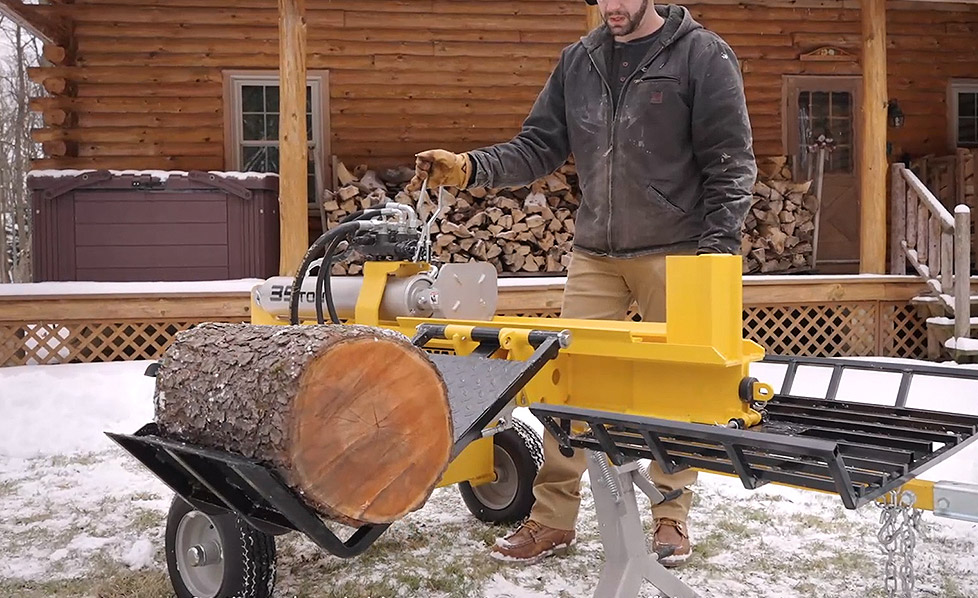
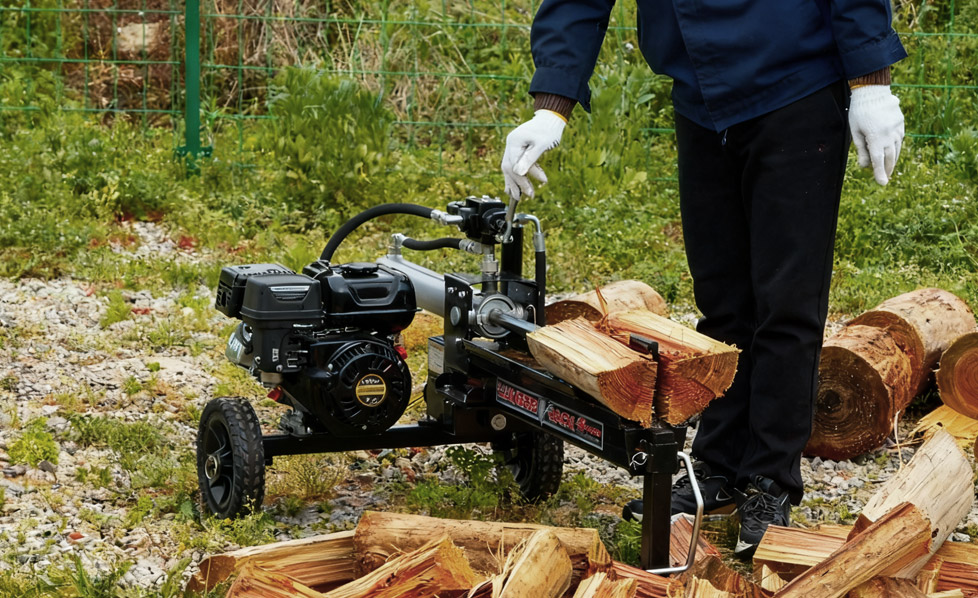




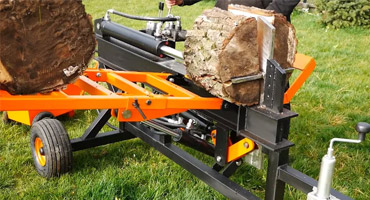

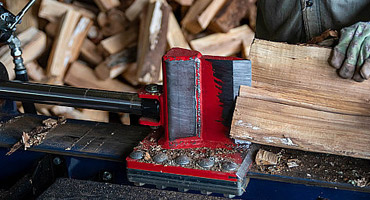




● 20-ton Splitting ForceCapable of splitting logs 21”/ 53cm ng with a ...
See Details
Australian Log Splitter Buying Guide: Matching Tonnage, Power, Wood and Safety
A splitter that looks impressive on paper can still leave you wrestling a 40 cm red gum round at the end of the day. The buyers who end up disappointed usually made the same mistake: they bought on tonnage alone, without matching the machine to their wood, the power available on their block, and the length of billets they cut.
The short answer up front: for mixed softwood, cypress and stringybark, 10 to 15 tonnes of force is plenty. For the dense hardwoods that supply most Australian firewood, plan on 22 to 30 tonnes, a sharp wedge, and a cycle time under 15 seconds. Above 30 tonnes only earns its price when you regularly feed in large, knotty, cross-grained rounds.
The rest of this guide explains why those numbers hold, how the power source changes the decision, and what to check before you pay.
Match Tonnage to the Wood You Actually Split
Splitting force is quoted in tonnes of hydraulic pressure at the wedge. It describes the toughest wood the machine can push apart, not how fast the ram travels, and speed is what decides how much firewood you get through on a Saturday.
Dry density is a useful shortcut. Radiata pine sits near 500 kg per cubic metre; river red gum, yellow box and ironbark run from roughly 900 to 1,100. Denser wood resists the wedge harder, so a machine that breezes through cypress will stall on the same diameter of box.
| Firewood type | Force to plan for | What to expect |
|---|---|---|
| Radiata pine, cypress, stringybark | 7 to 12 t | Straight grain splits quickly; wedge condition does most of the work |
| River red gum, yellow box, tallowwood | 18 to 25 t | Dense rounds of 30 to 45 cm; cycle time matters as much as force |
| Ironbark, grey gum, knotty or cross-grained timber | 25 to 35 t | Slow, high-force splitting; vertical operation saves your back |
| Kindling, small splits, orchard prunings | 5 to 7 t | A manual or light electric machine is enough |
Two lessons follow. Buy for the wood you split most weeks, not the easiest load in the pile, because a splitter that stalls on one log in twenty stops getting used. And force and wedge condition work together: a dull or mushroomed wedge wastes close to a third of your available pressure.
Diameter matters as much as species, and a 45 cm round of tallowwood is a different job from 15 cm billets. If your typical rounds run wider than 40 cm, prioritise machines that work vertically. For a wider decision framework, see this guide to choosing a log splitter for your firewood volume and wood type.
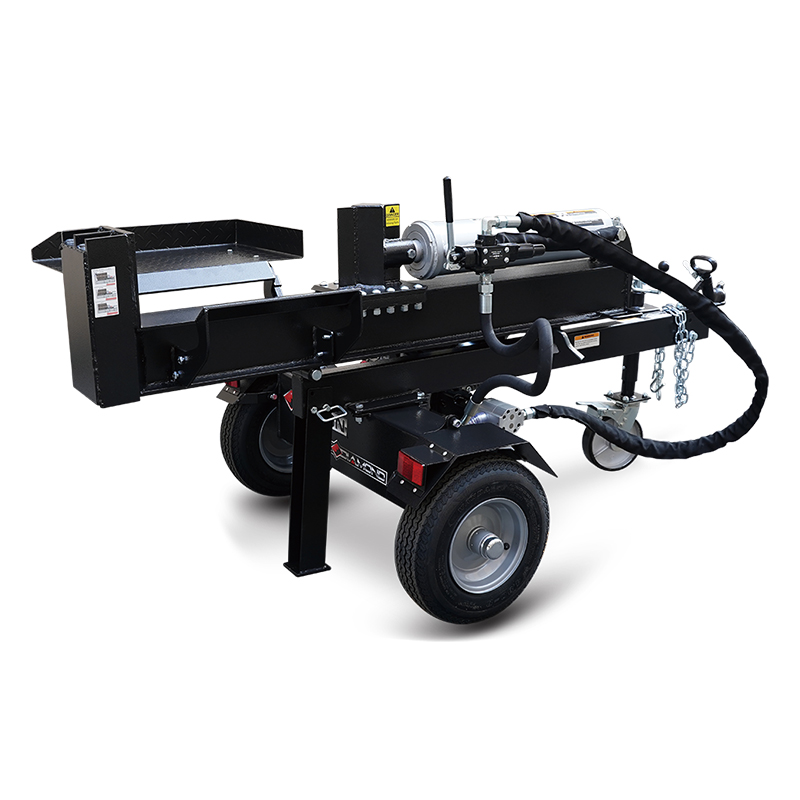 LST37 Australian-Style 37-Ton Towable Log SplitterA towable 37-ton petrol splitter with vertical or horizontal operation and 50mm hitch, useful for wide rounds and firewood processing away from shed power.View Product →
Petrol, 240V Electric or Tractor PTO
The power source usually decides more about daily satisfaction than an extra five tonnes of force, so settle it before comparing models.
- 240V electric. Quiet, no fuel to store, and available in 12 to 22 tonnes. A standard 10 A circuit delivers roughly 2.4 kW, so check the motor wattage, whether a dedicated circuit or 15 A outlet is needed, and the plug type. Extension leads must be correctly rated and fully unwound.
- Petrol. The right answer when the woodpile sits far from a power point. Engines run from 6.5 to 13 HP. Avoid ethanol blends such as E10, which absorb water and attack small-engine carburettors; use 95 RON unleaded without ethanol, add stabiliser if the machine sits for months, and run the carburettor dry before long storage.
- Tractor PTO and 3-point linkage. No engine to service and the lowest cost per tonne of force, but it needs roughly 20 to 35 HP and hydraulic flow around 20 to 40 L/min, and it cannot move without the tractor.
- Battery. 20 to 25 tonne models suit noise-sensitive blocks; runtime per charge is the constraint, and batteries dislike being stored flat in a hot shed.
In practice, suburban woodpiles with shed power suit electric, rural blocks suit petrol, and properties that already run a tractor suit PTO.
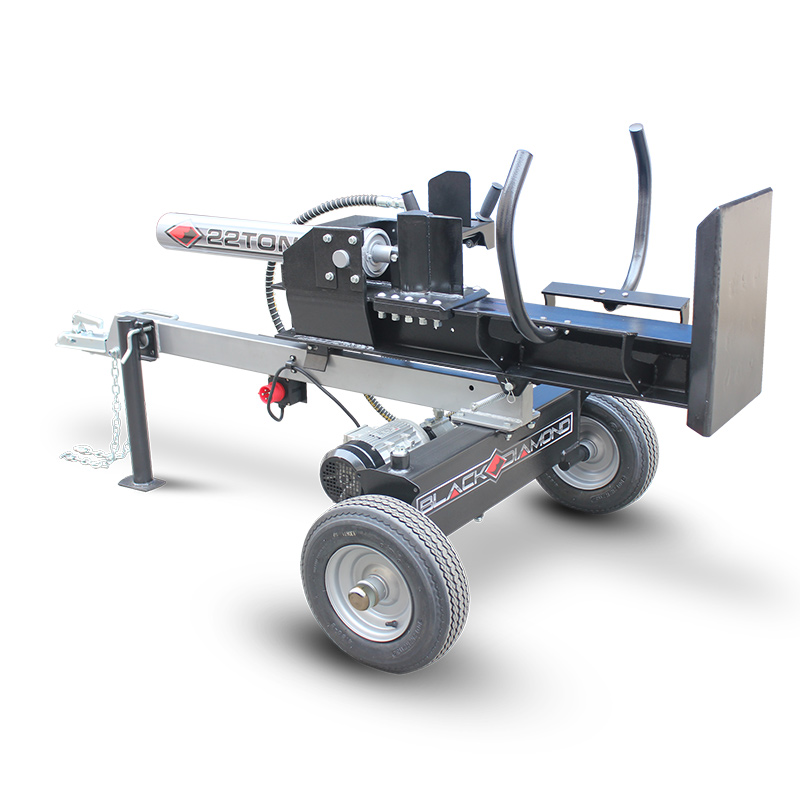 Black Diamond LSE22D 22-Ton Electric Log SplitterAn electric 22-ton vertical/horizontal splitter with 25-inch log capacity and steel cradle, suited to suburban woodpiles with shed power.View Product →
Vertical or Horizontal, Beam Design and Cycle Time
Orientation
Vertical machines let you roll a heavy round onto the splitting plate at ground level, which is the difference between working and lifting above 40 cm. Horizontal machines are faster for repetitive billets and keep the work at waist height. Many splitters convert between the two, and for a mixed woodpile that flexibility beats an extra five tonnes.
Beam design
Full-beam splitters carry the log along a beam running the full machine length, with the wedge driven by the ram; the frame is heavier and stiffer, which suits sustained high-force work. Half-beam machines fix the wedge and push the log into it, and they are adequate to about 22 to 25 tonnes. For box, ironbark or gnarly fence-line timber, the stiffer beam is the safer long-term choice.
Cycle time
Cycle time is the seconds for the ram to extend and return; most Australian-market machines run 8 to 15 seconds with a two-stage pump. Do the arithmetic before chasing tonnage: a 22-tonne machine with a 9-second cycle processes more firewood per hour than a 35-tonne machine taking 20 seconds, as long as it splits your logs.
Where a tractor is already on the property, a linkage-mounted vertical splitter handles large rounds at ground level without a second engine to maintain.
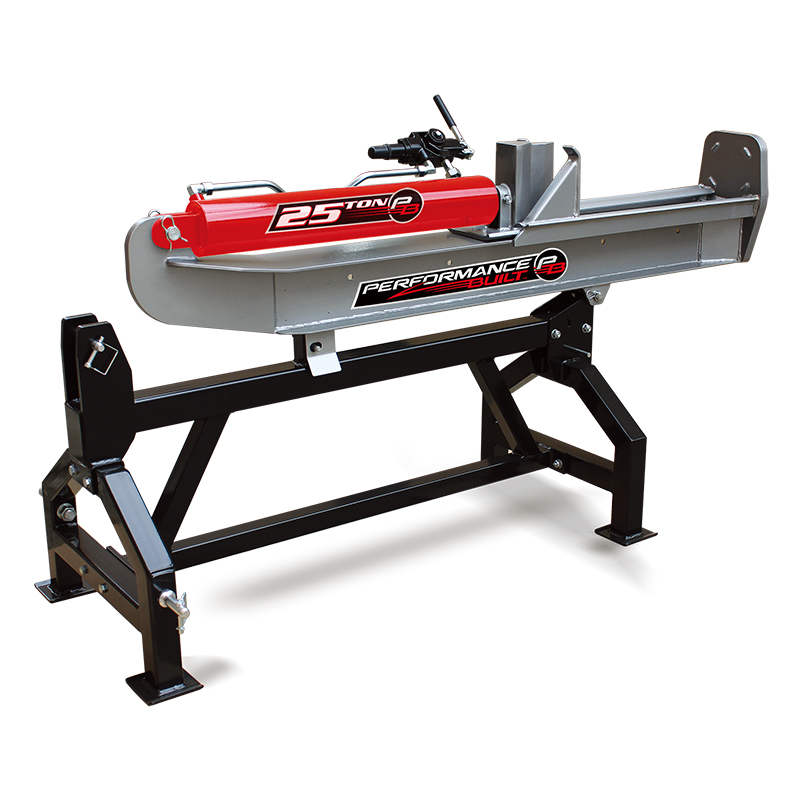 LTS25 3-Point Hitch 25-Ton Log SplitterA tractor-mounted 25-ton vertical/horizontal splitter for large rounds at ground level, with 26-inch log capacity and quick assembly.View Product →
Log Capacity, Working Height and Storage
8 to 15 sTypical cycle time on Australian-market splitters
300 to 520 mmCommon rated billet length; check it against your firewood length
22 to 30 tPractical sweet spot for mixed hardwood firewood
240 V / 10 AStandard outlet; some larger electric models need 15 A
- Rated log length. Most machines accept billets of roughly 300 to 520 mm. Firewood cut to 400 mm for a slow-combustion heater will not fit a 250 mm-rated machine, so read the rating rather than the photos.
- Maximum diameter. Around 250 to 400 mm horizontally, limited by the wedge and cradle; vertical operation takes wider rounds.
- Working height. Horizontal beams usually sit 600 to 700 mm off the ground, which suits standing work.
- Weight, wheels and storage. Machines over 100 kg need proper wheels to move across gravel. Store under cover: Australian UV degrades hydraulic hose, and grit in the oil is the leading cause of valve and seal failure.
Compliance, Safety and Spare Parts
Four checks catch most of the problems that appear after delivery.
- Electrical rating and marking. Electric models sold here should be rated 240 V / 50 Hz and carry the RCM compliance mark; ask for the applicable electrical safety documentation.
- Two-handed operation and guarding. The controls should require both hands, so neither can be near the wedge. Never hold a log while the ram moves.
- Condition, if buying used. Milky hydraulic oil means water contamination, deep pitting on the cylinder rod means a rebuild, and a mushroomed wedge means lost force.
- Spare parts and support. Hoses, seals, filters and wedges are consumables, and standard-size cylinders and valves can be rebuilt by a local hydraulic workshop.
Consumer guarantees under Australian Consumer Law apply regardless of the written warranty, so keep the receipt. Trade buyers should confirm hydraulic flow, cylinder bore and parts stock before ordering; you can request the specification sheet in writing here.
Rough Price Bands in Australia
| Machine type | Typical price (AUD) | Best suited to |
|---|---|---|
| 5 to 7 t manual or light electric | 300 to 700 | Kindling and small blocks |
| 10 to 15 t electric | 700 to 1,300 | Suburban woodpiles, easy-splitting species |
| 18 to 25 t electric or petrol | 1,200 to 2,500 | Most hardwood firewood |
| 30 to 40 t petrol or PTO | 2,500 to 5,000+ | Large rounds, farms, hire fleets |
Frequently Asked Questions
Q1: Is 22 tonnes enough for red gum and box?
For most rounds up to about 40 cm, yes, especially with a sharp wedge and the option to work vertically. Step up to 30 tonnes or more only for regular ironbark, cross-grained rounds or pieces wider than 45 cm.
Q2: Can a 240V electric splitter keep up with a season's firewood?
If you split steadily rather than in one weekend, yes. A 12 to 22 tonne machine will work through a couple of cubic metres of hardwood in a day; the limits are your circuit and your patience.
Q3: Horizontal or vertical?
If your typical round is over 40 cm and you work alone, choose a machine that converts to vertical. Otherwise horizontal is faster and easier on your back.
Q4: How long does split firewood need to season?
Splitting speeds up drying. Stacked loosely and covered on top, most hardwood reaches a usable moisture content below 20 percent in nine to twelve months; ironbark takes longer.
Q5: Does a PTO splitter need a big tractor?
Most three-point linkage splitters ask for roughly 20 to 35 HP and hydraulic flow around 20 to 40 L/min. Confirm the requirement before assuming a compact tractor is enough.
The short version: match force to your densest common wood, buy the fastest cycle time that force allows, confirm the electrical or hydraulic requirement before delivery, and check that wear parts are available locally. Get those four right and the machine will still be splitting firewood in ten years.
PREV:No previous article
NEXT:Low Profile Log Splitter Buying Guide: Tonnage, Working Height, and Towability
NEXT:Low Profile Log Splitter Buying Guide: Tonnage, Working Height, and Towability
Interested in cooperation or have questions?
Related products
-

-
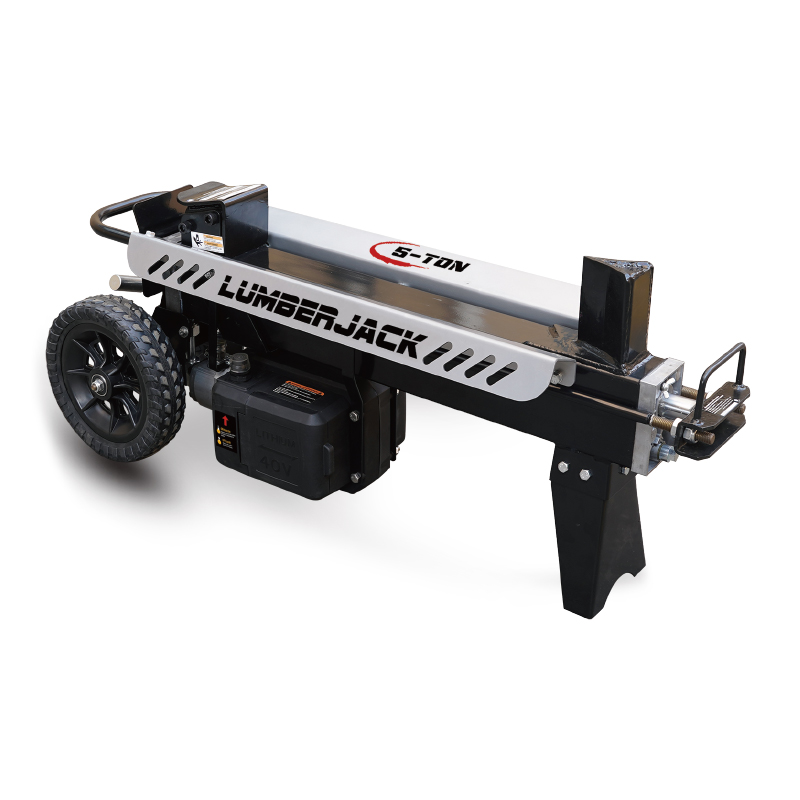
●40-Volt Brushless MotorThis reliable motor is highly efficient provid...
See Details -

●60-Volt Brushless MotorThis reliable motor is highly efficient provid...
See Details -
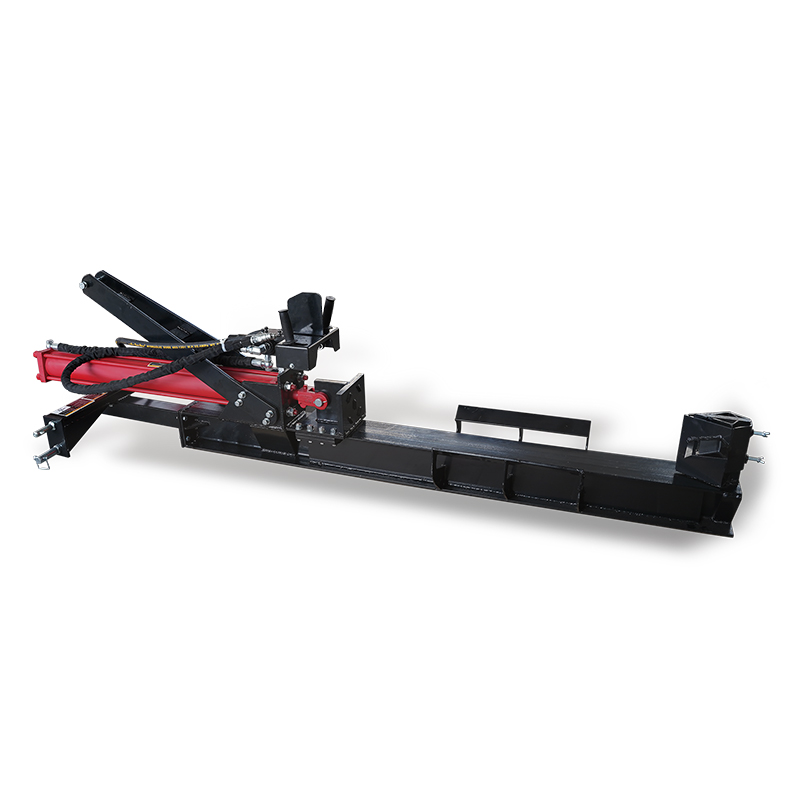
● 14Ton 3PT log splitter attaches to category 1 tractor 3-pt● Hitch an...
See Details