
 LANGUAGE
 English
 Deutsch
 Español
 Français
 русский











◆MODEL NO.: SP48103 ◆9HP GASOLINE ENGINE ◆IT IS TO DIG FOOTING HOLES, ...
See Details
Earth Auger Buying Guide: Match Power, Bit Size, and Torque to Your Soil
Thirty-five post holes for a 280-foot fence line sounds routine until you are three holes into compacted clay with a manual post hole digger and the better part of a Saturday already gone. That is usually the moment an earth auger enters the shopping list, along with a wave of conflicting advice about engine sizes and bit diameters.
Quick answer
The short version: buy for hole volume, hole diameter, and soil type first, and power source second. A one-man gasoline auger with an 8-inch bit covers most fence and planting work; tractor owners should compare a 3-point post hole digger; drill-driven bits are honest tools only for bulbs and shallow garden holes.
Get that order right and the machine pays for itself within a single fencing project. Get it wrong and you own a heavy, underpowered ornament. The sections below work through each decision in the sequence that matters on site.
Start With the Job: Hole Count, Diameter, and Depth
Before comparing engines, write down what you actually need to drill. Three numbers decide almost everything:
- Hole count: up to about ten holes a year, renting beats owning. Past thirty holes per season, a purchased auger wins on cost, availability, and familiarity.
- Hole diameter: the standard fencing rule is a hole roughly three times the post width. A 4x4 post wants a 10-12 inch hole; a 6x6 post wants 16-18 inches. Bulbs and bedding plants need only 2-4 inches, while saplings and shrubs settle well in 6-8 inch holes.
- Hole depth: set posts with about one third of their length underground and below the frost line in cold regions — 36-48 inches across much of the northern United States. Deck footings commonly specify a 10-inch diameter at 42 inches deep.
This is where an 8-inch bit earns its place as the default fitment on serious gasoline augers: it covers 4x4 posts with room for tamped backfill or concrete, and it handles most planting work. Diameters beyond that start demanding a second operator or a tractor.
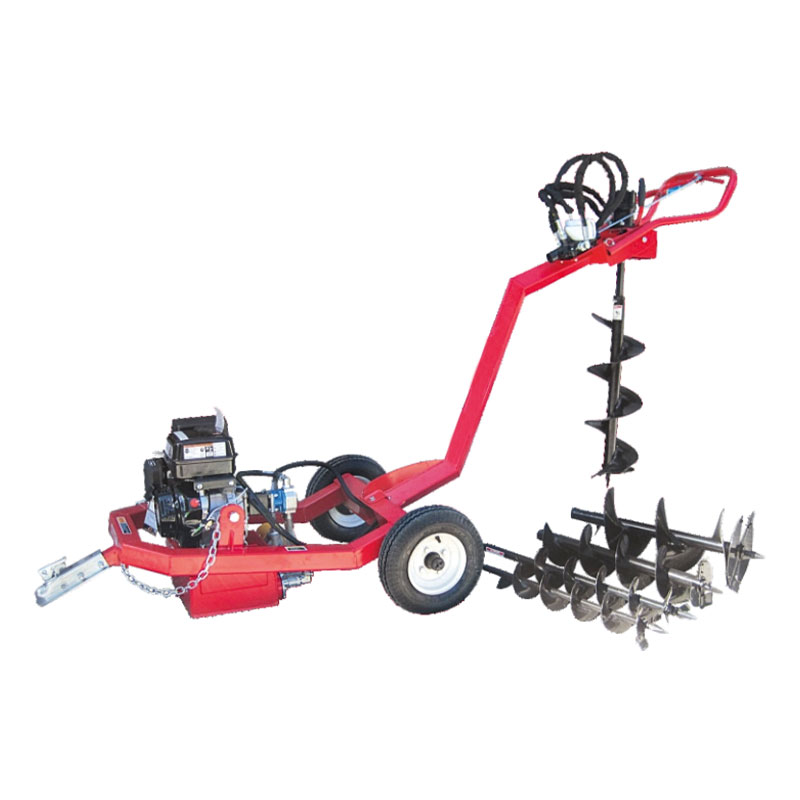 Earth Auger with 8" Auger N920A gasoline earth auger fitted with an 8-inch bit, the diameter covered in the surrounding discussion as the practical default for 4x4 fence posts and most planting work.View Product →
Power Sources: What Each Type Is Actually Good At
One-person gasoline augers
Most residential and light-farm buyers land here. Compact units in the 43-52cc two-stroke class weigh around 9-10 kg and turn 6-8 inch bits in sand and loam without complaint. Heavier machines in the 9HP class keep the same single-operator layout but hold torque noticeably better in clay, which is exactly where lighter units stall out.
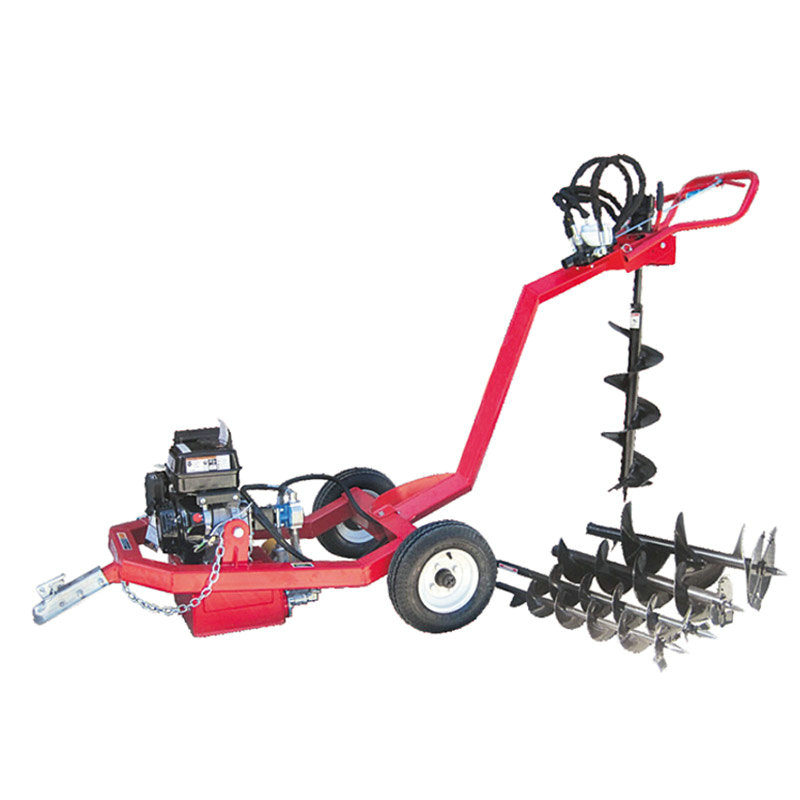 Earth Auger 9HP with 8" Auger SP48103A heavier 9HP single-operator auger that holds torque better in clay than compact units, matching the paragraph's point about power needed where lighter machines stall out.View Product →
Two-person gasoline augers
A second handle and a second operator let you run 10-12 inch bits and survive rock strikes, because two people share the recoil torque instead of one pair of wrists. The trade-offs are transport weight and having to schedule another human being.
Drill-driven auger bits
A bit chucked into an 18V cordless drill is genuinely useful for bulbs, grass plugs, and blending soil amendments. It is not a fence tool; stalling out in anything firmer than loose, worked soil is normal, and the drill clutch absorbs the punishment.
PTO-driven post hole diggers
If a compact tractor already lives in the shed, a 3-point hitch digger converts PTO power into the most productive hole-making setup short of a contractor rig: 9-12 inch augers, depths past three feet, and no separate engine to maintain.
| Power source | Typical spec | Best fit | Watch out for |
|---|---|---|---|
| One-person gasoline | 43-52cc, 6-8 in. bit, 9-10 kg | Fence lines and planting on residential land | Torque kickback in rocky soil |
| Two-person gasoline | 10-12 in. bits, dual handles | Clay and commercial fencing crews | Weight and transport |
| Drill-driven bit | 18V+ drill, 2-4 in. bits | Bulbs, plugs, shallow garden holes | Stalls in firm soil |
| PTO post hole digger | Category 1 hitch, 540 rpm | Farms and acreage with a tractor | Requires a matching tractor |
Soil Type Decides the Purchase, Not the Brochure
Soil is where auger purchases succeed or fail, and it is the one variable no spec sheet can tell you about your own land.
- Sand and loam: any powered auger copes. Standard blade points cut cleanly and the flighting lifts cuttings well.
- Clay: sticky material climbs poorly and can lock a bit mid-hole. Look for wider flighting, more torque at the shaft, and a lower final drive ratio.
- Rocky ground: standard points dull fast. Replaceable rock teeth, a hard-faced pilot bit, and a clutch that slips instead of transferring every impact to your arms justify their price here.
- Frozen or heavily compacted ground: no consumer auger handles this honestly. Thaw it, wait, or pre-drill a pilot hole with a narrower bit first.
Torque, not horsepower, is the number that rescues you in clay and rock. Horsepower is easy to advertise; torque at the auger shaft is what you feel when the bit bites a buried stone. Two-stage gear reduction is the design feature to look for on anything above hobby grade.
There is a side benefit worth knowing as well: auger-drilled holes fracture and loosen the ground around them, which is one reason groundskeepers use them for aeration. We explain the mechanism in our note on why earth augers improve soil aeration.
Specs Worth Checking Before You Pay
Engine displacement makes a poor shorthand for quality. Four areas separate machines that last for seasons from machines that last three weekends:
Gearbox
Ask for torque at the shaft or the gear ratio in writing. Two-stage reduction is standard on serious machines; a single-stage drive on a claimed 9HP unit is a warning sign.
Engine and fuel
Two-stroke engines demand mixed fuel; larger four-stroke units cost more up front but remove the mixing routine. Judge sustained output under load, not the peak rating.
Handling and safety
Anti-vibration mounts, a throttle lockout, and a stop switch within thumb reach. Two-hand throttle designs exist because one-handed operation is where most injuries begin.
Wear parts
Replaceable cutting points, blade bolts you can actually source, and a published parts list. A cheap auger with a proprietary blade costs more over three seasons than a supported one.
For tractor owners there is one more checkpoint: confirm hitch category and PTO speed before ordering a post hole digger. A Category 1 hitch suits most compact tractors in the 20-50 hp range, and gearbox-driven diggers typically expect 540 rpm PTO output. Getting those two details wrong turns the attachment into an expensive ornament.
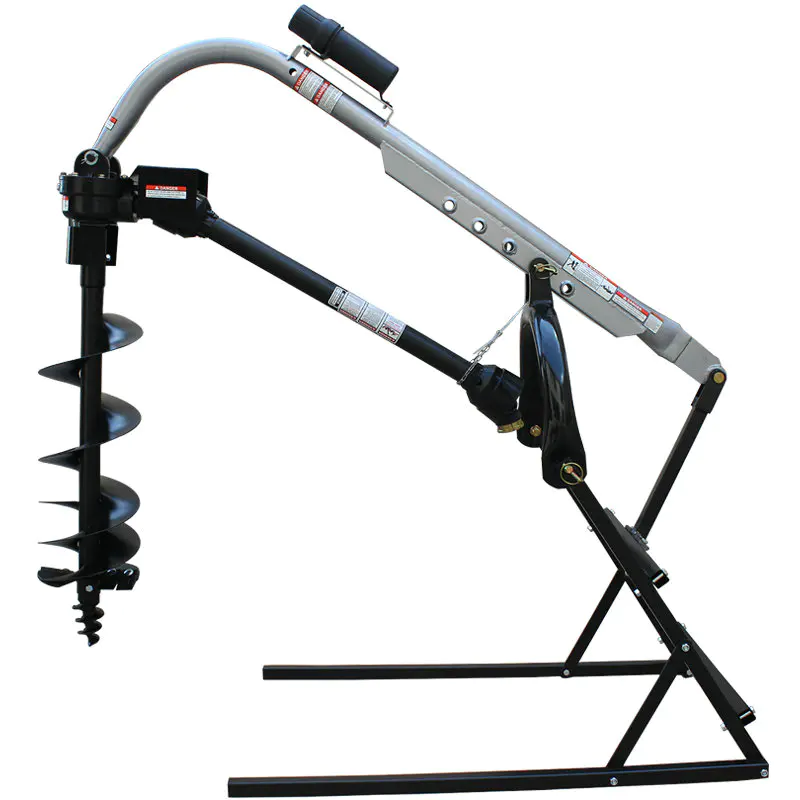 3PT Post Auger SP48109A tractor-mounted post hole digger for Cat 1 and Cat 2 hitches with a shear-bolt-protected driveline and 540 RPM PTO requirement, matching the tractor checkpoint discussed just before it.View Product →
It is also worth asking any supplier how spare parts ship. Wear items that arrive within days keep a fencing season on schedule; parts that take six weeks turn a minor breakdown into a cancelled job.
Questions Buyers Ask Before Ordering
Q1: What size auger bit do I need for a 4x4 fence post?
Plan on a 10-12 inch bit. That gives roughly three times the post width and leaves room for tamped soil or concrete. Setting 6x6 posts calls for 16-18 inches, which generally means a two-person or PTO machine.
Q2: How deep can a one-man gasoline auger drill?
Most pull a 30-36 inch hole in reasonable soil, and a 48-inch extension shaft is realistic in sand or loam. In clay or rock, depth is limited less by the engine than by your ability to control torque at the handles.
Q3: What should I do if the auger bites and stalls?
Kill the throttle first. Reverse the bit by hand or at low idle to back it out of the cut rather than hauling the machine upright; dragging a locked bit straight out is how wrists and gearboxes get damaged.
Q4: Handheld auger or 3-point post hole digger?
Count holes and horsepower. Fewer than roughly forty holes a year without a tractor points to a handheld gasoline unit. If a compact tractor already works your land, the PTO digger wins on speed, depth, and maintenance.
The fastest route to buyer's regret is purchasing by engine size alone. Hole diameter and depth choose the bit, soil chooses the torque, and annual volume chooses between buying and renting. Work through those three in order and the spec sheet reads itself.
As a manufacturer of outdoor power equipment based in Jiashan, between Shanghai and Hangzhou, we build gasoline earth augers and tractor-mounted post hole diggers for dealers and distributors worldwide, and we quote against exact hole specifications and ground conditions rather than generic listings. If you are sourcing at volume, contact our team with your requirements and we will match the model to the job.
PREV:Drum Spike Aerator Benefits: What It Fixes, Where It Fails, and How to Choose
NEXT:Electric Leaf Mulcher Shredder Buying Guide: Power, Ratio, Safety & Maintenance
NEXT:Electric Leaf Mulcher Shredder Buying Guide: Power, Ratio, Safety & Maintenance
Interested in cooperation or have questions?
Related products
-
-
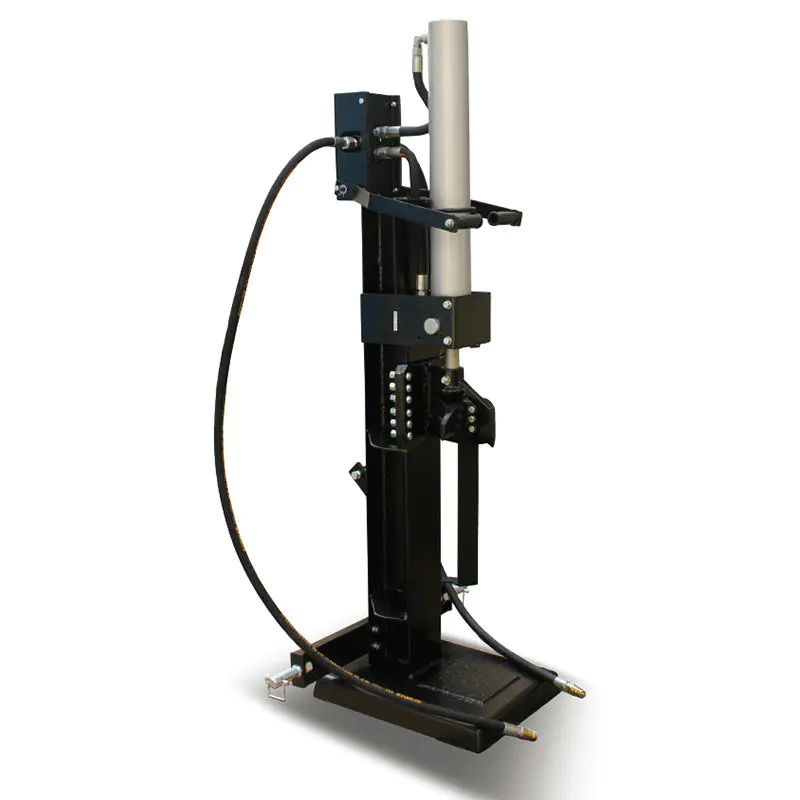
DESCRIPTION Model no.: LSE 14Max. splitting force: 14TonMax. log lengt...
See Details -
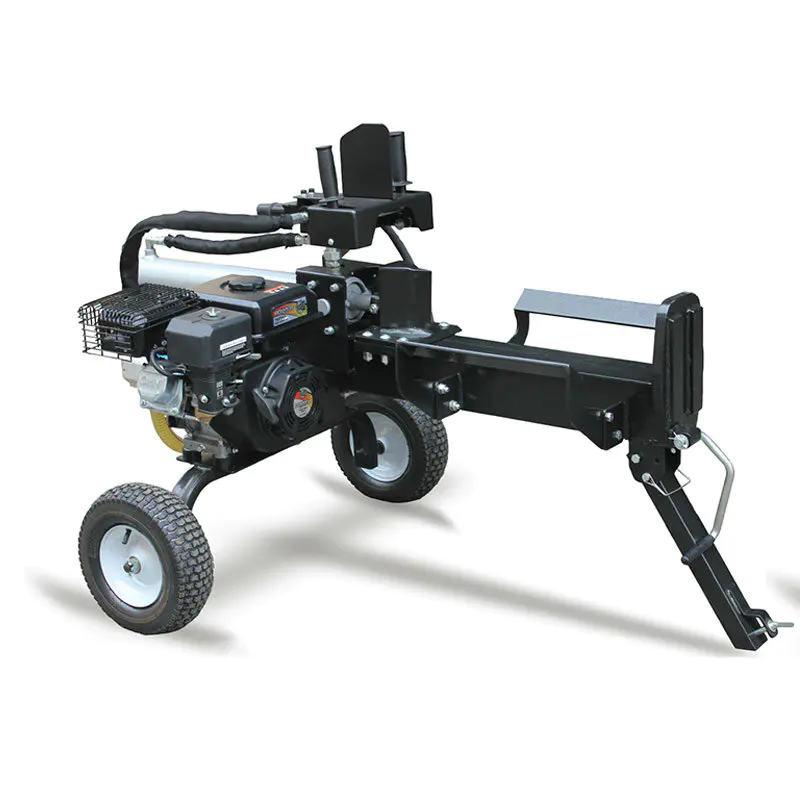
DESCRIPTION Accommodates splitting in horizontal only Half beam design...
See Details -
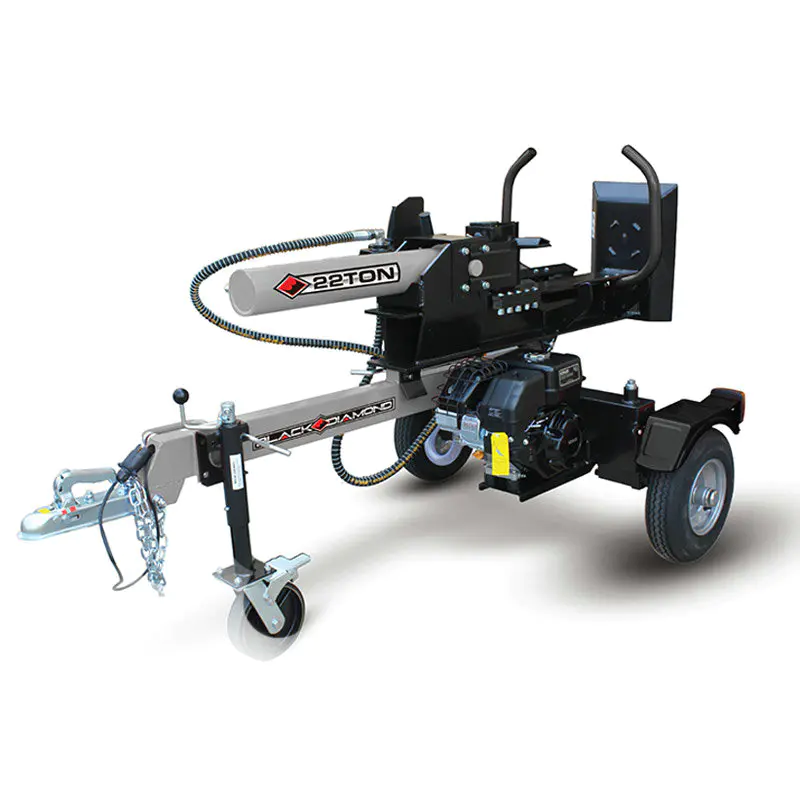
DESCRIPTION Vertical or horizontal operating position lets you work mo...
See Details -
MODEL NO. :SP48109 Post hole digger for most compact Cat 1 & Cat 2...
See Details -
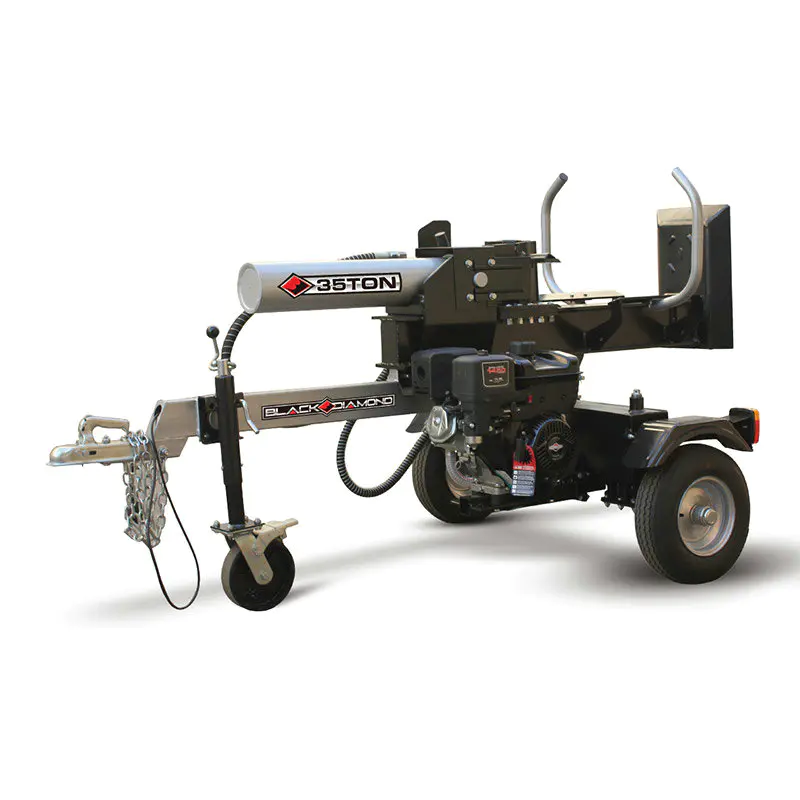
DESCRIPTION Vertical or horizontal operating position lets you work mo...
See Details
